|
|
|
|
|
| |
|
|
|
| |
|
|
| |
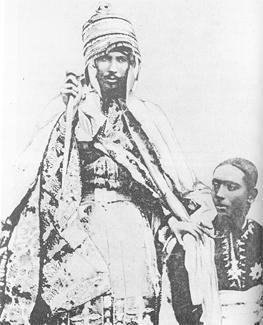
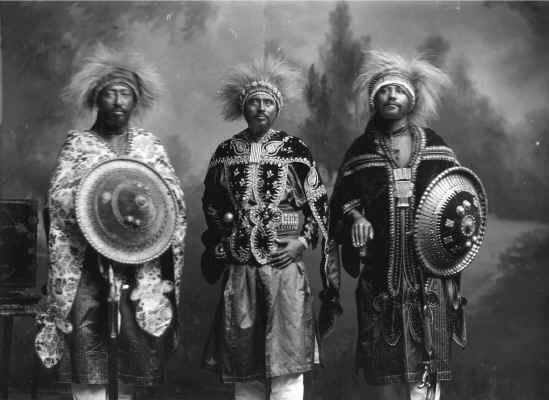
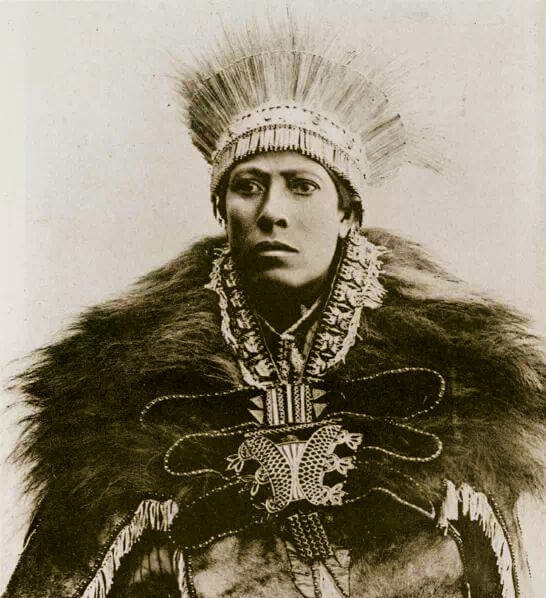
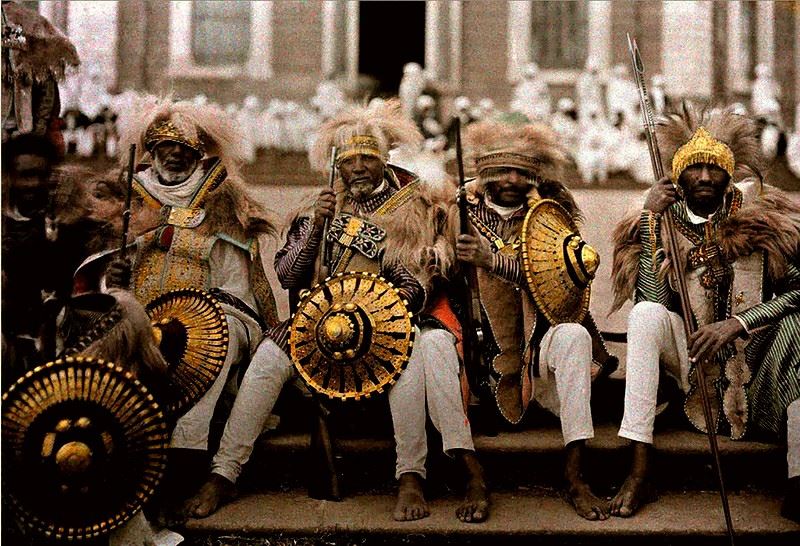
Tekle Haymanot of Gojjam
Tekle Haymanot Tessemma, ( 1847–January 10, 1901) was King of Gojjam, a member of the Solomonic dynasty of the
Ethiopian Empire. He later was an army commander and a member of the nobility of the Ethiopian Empire.
|
|
|
|
Biography
Born Adal Tessemma, Tekle Haymanot Tessemma was the son of Tessemma Goshu, Negus of Gojjam. Gojjam had long
been a vassal kingdom within the Ethiopian Empire. The title "King of Gojjam" was an honorific title. The last time a
King of Gojjam was elevated to Emperor was during the "Era of the Princes" (Zemene Mesafint). Like his father,
NegusTessemma Goshu, Adal Tessemma became the Negus of Gojjam.
Under Tekle Giyorgis
Dejazmach Tessemma Goshu died during his son's minority. As a result, a rival named Dasta Guala assumed control in
Gojjam and imprisoned Adal. Adal eventually escaped to the lowlands and raised an army. After returning to Gojjam
and defeating Dasta, Adal submitted to Negusa Nagast Tekle Giyorgis who confirmed him as the Shum of Gojjam and
as Dejazmach. The Negusa Nagast even allowed Adal to marry his paternal sister, Laqetch Gebre Mehdin.
Under Yohannes IV
On 11 July 1871, Dejazmach Kassay Mercha defeated Negusa Nagast Tekle Giyorgis and reinstated Dasta in Gojjam. On
21 January 1872, Kassay Mercha became Nəgusä Nägäst Yohannes IV and left Gojjam. Adal then returned to Gojjam
and killed Dasta. By 1873, Adal had consolidated all of Gojjam under his rule. In 1874, Adal submitted to Negusa
Nagast Yohannes IV. Adal was now Ras Tekle Haymanot Tessemma.
On 20 January 1881, in Debre Tabor, Negusa Nagast Yohannes IV appointed Ras Tekle Haymanot Tessemma as Negus
of Gojjam Province and as Negus of Kaffa Province. However, the latter province was only his if he was able to conquer
it. Unfortunately for Ras Tekle Haymanot Tessemma, Ras Menelik, Negus of Shewa, was also interested in Kaffa
Province. Yohannes provided Tekle Haymanot with 8,000 rifles to help with the conquest.
The Battle of Embabo
The followers of Negus Tekle Haymanot Tessemma attempted to extend his control over the Kingdom of Kaffa. But,
on 6 June 1882, his forces were defeated at the Battle of Embabo by the superior forces of Negus Menelik. Tekle
Haymanot Tessemma was captured and Menelik gained the upper hand in Kaffa. But Yohannes intervened and, while
allowing Menelik to have Kaffa, he made Menelik give Wollo Provinceto Ras Araya Selassie Yohannes, his legitimate
son.
Destruction and submission
In the late 1880s, Mahdist raiders from the Sudanencroached on Gojjam and Begemder. On 18 January 1888, a large
Mahdist army defeated Tekle Haymanot Tessemma's army at Sarweha in Dembea. As a result of this loss,
northwestern Ethiopia was open to the Mahdists who followed up their victory by entering, sacking, and burning
Gondar. Thousands of Christians were captured, enslaved, and marched off to Metema.
Emperor Yohannes IV ordered Negus Menelik and his Shewan army into Gojjam and Begemder. Sensing a shift in
power, Negus Tekle Haymanot Tessemma negotiated a defensive alliance with Menelik. After Menelik secured Gojjam
and Begemder, Yohannes ordered him to return to Shewa.
In September 1888, when Tekle Haymanot Tessemma refused to contribute forces to the efforts of Yohannes against
Mahdist who had re-entered western Gojjam, Yohannes suspected Tekle Haymanot and Menelik of plotting against
him. To destroy the power of Tekle Haymanot, the army of Yohannes laid waste to much of Gojjam. As a result of the
destruction, Tekle Haymanot submitted to Yohannes.
Under Menelik II
In 1889, soon after the death of Yohannes at the Battle of Gallabat, Menelik proclaimed himself Nəgusä Nägäst Menelik
II. Negus Tekle Haymanot pledged his allegiance to the new Nəgusä Nägäst. Menelik reinstated Tekle Haymanot as
Shum of Gojjam and named him as an advisor.
Battle of Adwa
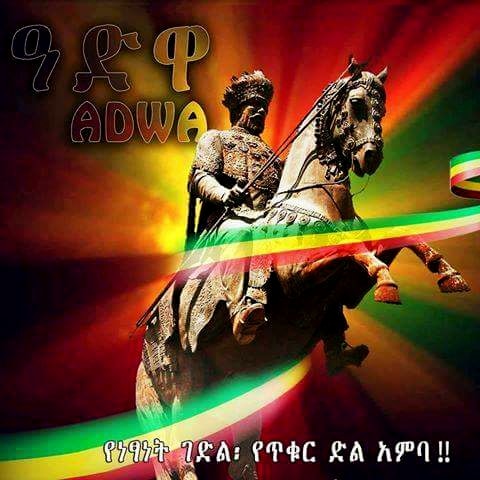
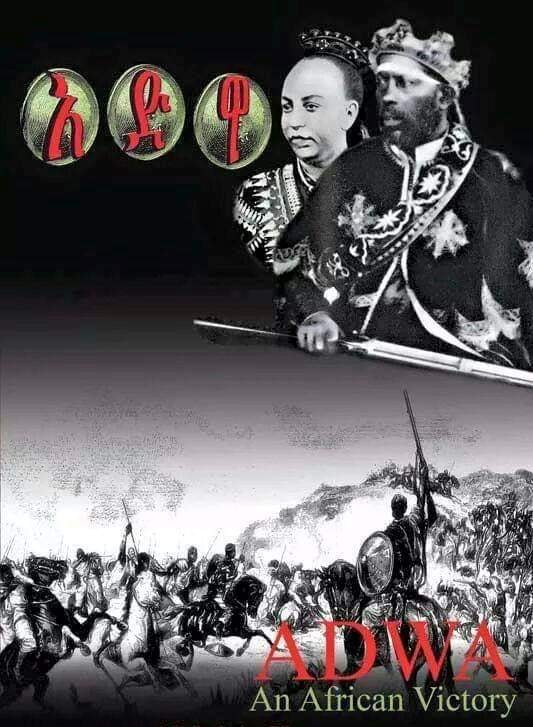
In 1896, Negus Tekle Haymanot fought at the Battle of Adwa on the side of Menelik and was a hero of that action.
Death
Ultimately Emperor Menelik determined that Gojjam was too valuable a province to be held by one man and, upon the
death of Tekle Haymanot, Menelik divided Gojjam into three parts. He assigned the three parts to different men
responsible to him. One of the men came from Shewa.
Tekle Haymanot Tessemma was the father of at least three sons and four daughters. His sons were as follows:
Bezabah, and Balaw. One of his sons, Ras Hailu Tekle Haymanot, succeeded him as Hailu IIof Gojjam.
Source: Tsega Tekle Haimanot FB Post ~ 02-26-2019
|
| |
|
|
| |
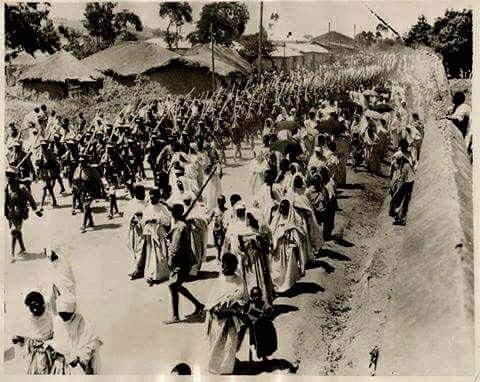
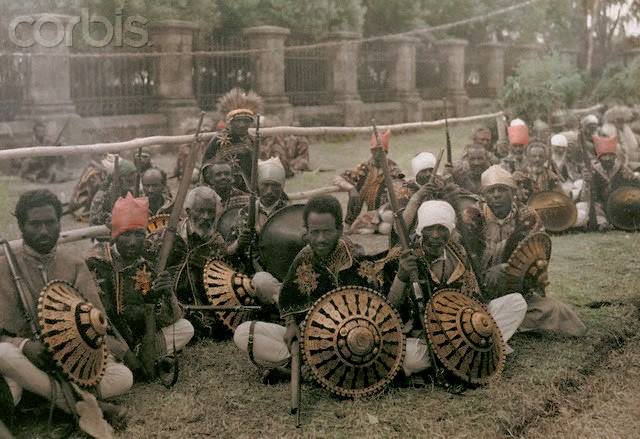
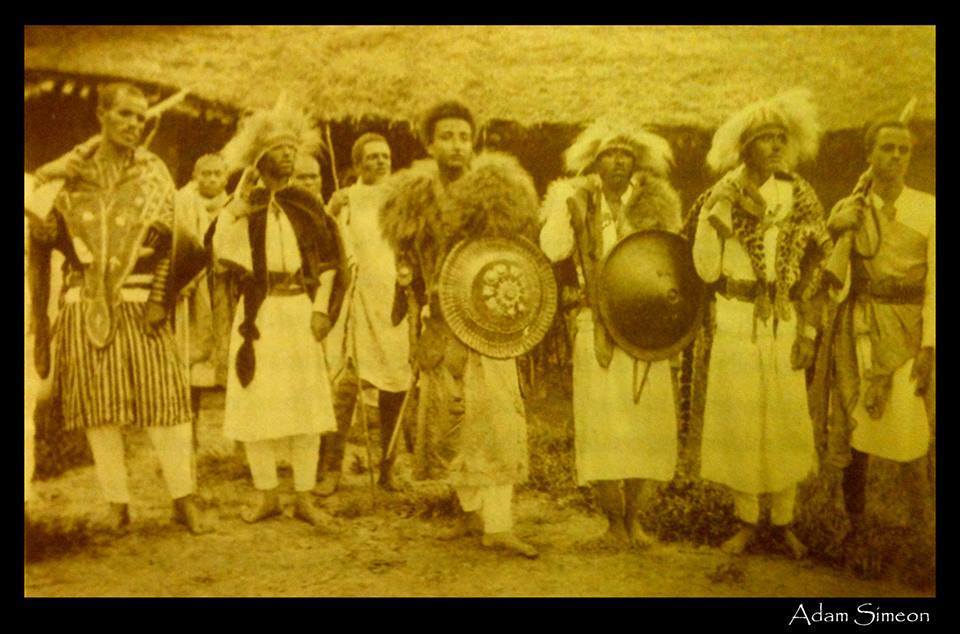
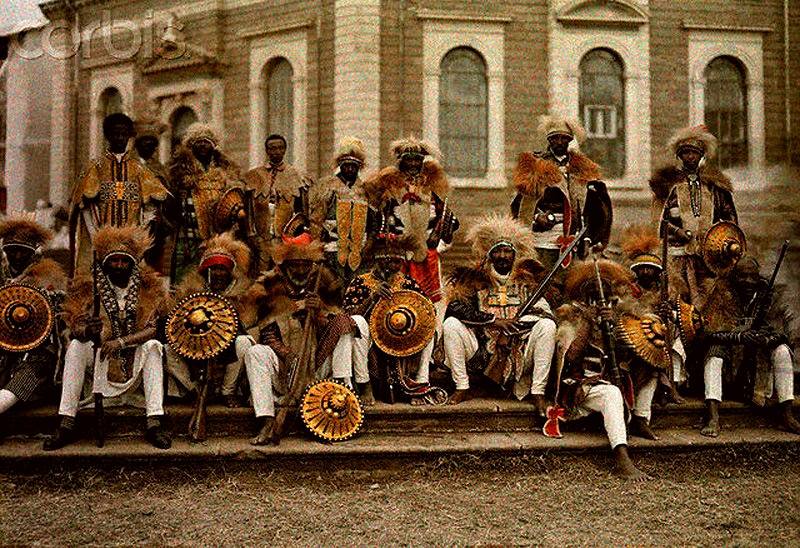
Ethiopians marching to the Battle of Adwa
|
|
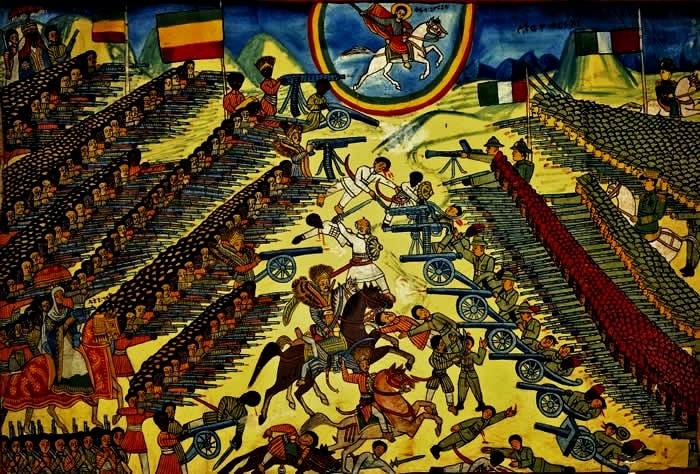
Painting depicting the Battle of Adwa
|
|
|
|
|
|
|
| |
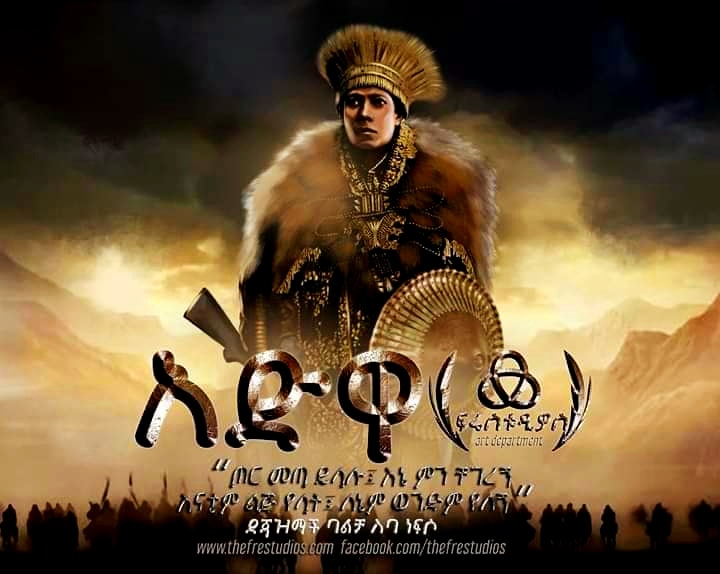
LESSONS ON A HEROIC LIFE AND DEATH - BALCHA ABA NEBSO
Dejach Balcha is the epitome of patriotism, who lived a heroic life and died a hero. Dejach Balcha was a commander of
the Ethiopian army in 1896 at Adwa. His leadership in that battle was crucial in winning that war.
In 1936 when the Italians invaded Ethiopian again, that old war horse and brave soul, a man's man and a heroes hero,
Balcha Aba Nebso, who was retired and in his seventies came out of retirement, organized an army and joined the
fight in defense of his beloved Ethiopia. But unfortunately in November 1936, his unit was outnumbered and
surrounded by the Italians. Dejach Balch was wounded and fell in the battlefield. The Italian commander knowing the
value of capturing him alive offered Dejach Balcha his life if he surrendered. Dejach Balcha smiled, drew his pistol and
shot the Italian commander in the head and killed him instantaneously. Needless to say he was showered with bullets
and died a heroic death.
Zerrrraf!
Source: Tsega Tekle Haimanot FB Post ~ 02-26-2019
|
|
|
|
|
|
|
| |
|
|
|
| |
| |
|
|
|
"Enemies have now come upon us to ruin our country
and to change our religion. Our enemies have begun the
affair by advancing and digging into the country like
moles. With the help of God, I will not deliver my country
to them. Today, you who are strong, give me your
strength, and you who are weak, help me by prayer." -
Emperor Menelik II of Ethiopia.
#TheBattleOfAdwa
Source: Tsega Tekle Haimanot FB Post ~ 02-28-2019
|
|
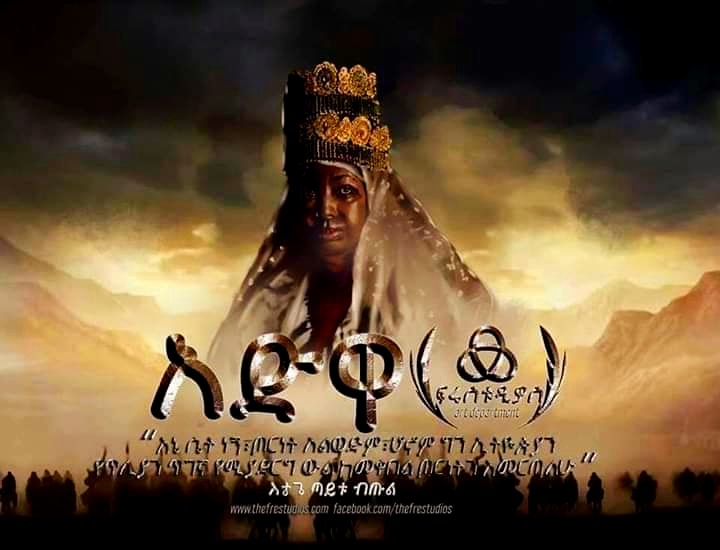
"I am a woman. I do not like war. However, I would rather
die than accepting your deal.... Don't ever think that we are
not willing to sacrifice our comfort and die for our country.
Giving ones life for the country is an honorable death!"
"Nobody is afraid. We will see when you turn into action.
Don't ever think that we are not willing to sacrifice; I do not
want to keep you here; it is getting dark; I am sure you have
a lot of things to do to put your threats into action."
These were the words of Empress Taitu when the Italian
advisor to the Emperor, Antenolli tore apart the translation
of the revised Wuchale accord that in effect declared the
agreement of the Italians to discard article 17.
#TheBattleOfAdwa ����
Source: Tsega Tekle Haimanot FB Post ~ 02-28-2019
|
|
|
|
|
|
| |
|
|
|
|
|
|
| |
| |
|
| |
| |
| |
|
|
| |
|
|
Mobilization Proclamation
Oct. 03, 1935
|
|
|
The mobilisation proclamation, of 3rd October 1935, read by the Grand Chamberlain, read as follows:
The conflict between Italy and Our country, which has now lasted for almost a year, started at Wal-Wal on 5th
December, 1934.
Our soldiers, serving as an escort to an international commission, were attacked in Our territory by Italian troops.
Italy, following the attack, demanded reparations and apologies, which were refused.
When, after much resistance on Italy's part, We were able, thanks to our perseverance and the efforts of the League of
Nations Council, to bring this difference before the arbitrators, they unanimously recognised that We were guiltless of
the fault Italy imputed to Us.
But Italy, which for a long time has shown an unconcealed desire to acquire Our country, now prepares to attack Us.
Renouncing the signature she gave to the League Covenant, violating peace promises solemnly made to Us in the
1928 Italo-Ethiopian Treaty, and reducing to nothing all international engagements, notably the Pact renouncing war,
Italy prepares a second time to violate Our territory.
The hour is grave. Arise, each of you! Take up arms, and rush to the defence of your country. Rally to your chiefs;
obey them with single purpose, and repel the invader!
May those who are unable because of weakness and infirmity to take an active part in this sacred quarrel, help us with
their prayers.
The opinion of the world ahs been revolted by this aggression against Us. God be with Us all.
All forward, for your Emperor and for your country
His Imperial Majesty Emperor Haile Selassie I ~ Oct. 3, 1935
|
|
|
|
|
People of my country and especially my faithful soldiers!
No human lips can express the thankfulness which I feel to the merciful God who has enabled me to stand in your
midst on this day of which the angels in heaven and the creation on earth could neither have thought of nor known.
Before everything else I want to tell you and to make you understand that this day is a day on which a fresh chapter of
the history of the New Ethiopia begins. In this new era a new work is commencing which it is the duty of all of us to
perform. ...
|
|
|
A New Day
People of my country, Ethiopia!
Today is a day on which Ethiopia is stretching her hands to God in joy and thankfulness and revealing her happiness
to her children.
This day, on which the people of Ethiopia are freed from oppressive foreign yoke and eternal servitude and on which I
am enabled to rejoin my people, whom I love and have longed for, will be honoured as a holiday to be commemorated
annually as a Great Ethiopian Anniversary. On this day we shall remember those heroic warriors who, determined not
to surrender the great charge passed on to them by their Father, became sacrifices, shedding their blood and breaking
their bones for the freedom of the land they loved and for the honour of their Emperor and their flag.
The history of Ethiopia will be witness for these Our warriors.
The tribulations and afflictions which befell us during the past five years and which cannot be recounted and
numbered in detail will be a great lesson to Us all, and with industry, unity, co-operation and love engraved in your
hearts, will be a great incentive to you to be my helpers in the affairs of Ethiopia which I have in mind. In the New
Ethiopia I want you to be a people undivided and endowed with freedom and equality before the law.
You will have to join me in my efforts for the prosperity of the country, for the riches of the people, for the
development of agriculture, commerce, education and learning, for the protection on modern lines of administration
of the country.
It is my firm wish and purpose to merit the blessing with which God in His mercy has visited Us, first, by showing our
gratitude to Our Allies, the British, by the release of the Imperial troops to fight the common enemy on other fronts,
and by supplying them with troops whenever they may be needed; secondly, to do work beneficial to the people and
the country by establishing in our Ethiopia a Government which will protect the Faith and cause it is to be respected,
and by guaranteeing liberty of the people and Freedom of conscience.
What I would finally announce to you, my people, is that today is a day of rejoicing for Us all. Today is a day on which
we defeated our enemy. Therefore, when we say let us all rejoice with our hearts let not our rejoicing be in any other
way but in the spirit of Christ. Do not return evil for evil. Do not indulge in the atrocities which the enemy has been
practising in his usual way, even up to the last moment.
Take care not to spoil the good name of Ethiopia by acts which are worthy of the enemy. We shall see that our
enemies are disarmed and sent the same way they came. As St. George who killed the dragon is the Patron Saint of
our army as well as of our allies, let us unite with our allies in everlasting friendship and amity in order to be able to
stand against the godless and cruel dragon which has newly risen and which is oppressing mankind. I charge you to
consider them as a brother and a friend and to show them kindness and consideration.
|
|
| |
Ethiopian soldiers in Korea
|
|
Proud of my fellow Ethiopians, from the Imperial Guard,
Kagnew unit who served gallantly in Korean war from
1950 to 1953.
The Kagnews served with great distinction, principally
alongside the 7th Infantry Division, and by all accounts
(including the enemy's) acquitted themselves well in
battle, suffering 121 dead and 536 wounded during the
course of the conflict.[3] At the conclusion of the war the
Ethiopians were the only contingent that had no
prisoners to collect from the North Koreans since no
Kagnew soldier ever surrendered. They had the
additional distinctions of having never been bested in
battle during the war. The Kagnew Battalion engaged in
combat 238 times and won every encounter, as both
aggressors and defenders. Another distinction was that
they never left their dead behind, and it was noticed that
there never seemed to be dead bodies of Kagnew soldiers
on the battlefield. This earned them the respect of their
American colleagues, while fostering the belief among
their opponents, who had often never even seen black
people before, that they were superhuman. — with Mark
Huluka.
|
|
|
|
|
| |
|
|
Nothing is hidden from God's view!...
|
|
|
|
Copyright © 2011-2019 UMOJA Connection, Inc.
All rights reserved.
|
|
|