|
|
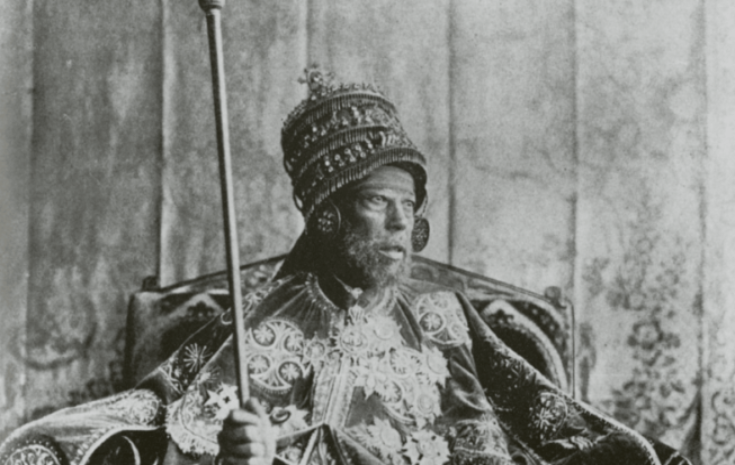
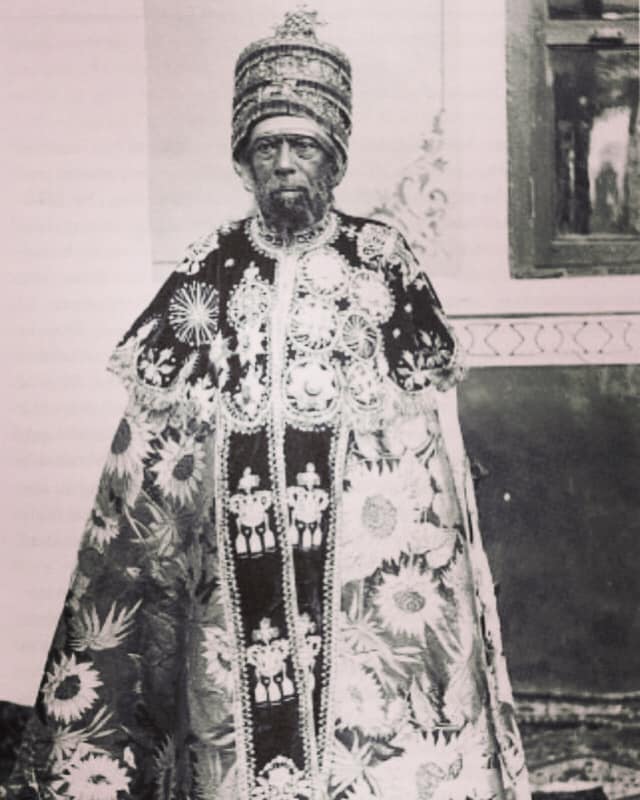
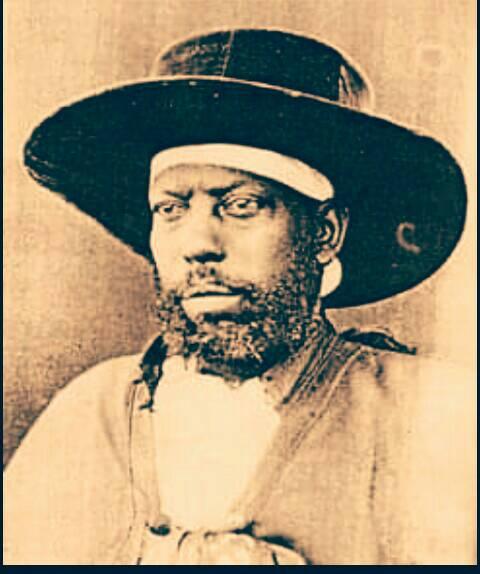
Emperor Menelik II
The Man Who Saved Ethiopia From Colonialism At The Battle of Adwa
Emperor Menelik II is a revered man in history,
he saved Ethiopia from colonization at the battle of Adwa!
|
|
By Takudzwa Hillary Chiwanza.
August 23rd, 2019
When the advent of colonialism swept across Africa, it was extremely insurmountable for most
of the African leaders to resist the military might of the Europeans. Colonization was effected
through a powerful mix of trickery, religion and military force.
"This country is mine and no other nation can have it," Emperor Menelik said in a response to
Italy's claim that it had created a protectorate within his territory. This is the attitude that
made him look at colonialism straight in the face and defeat it.
Emperor Menelik II was born as Sahle Maryam on 17 August 1844 and died on 12 December
1913. Born into royalty, he was the son of King Haile Menekot, who was the governor of the
province of Shewa. Haile Menekot had laid it clearly that he was going to be succeeded by his
son Sahle Maryam, but when he died in 1855, Tewodros II launched an attack on Shewa and
conquered it. Menelik was taken as a prisoner by Tewodros II and transferred him to the
mountain stronghold of Magdala. Tewodros raised him as a son, treating like a prince and even
offered him his daughter for a hand in marriage (he accepted the offer).
In 1865, Menelik escaped so that he could claim back Shewa. The non-royal Ato Bezebeh had
been appointed governor of Shewa. Upon Menelik's return to take back Shewa, Ato ran away.
Menelik immediately discharged his charm offensive to win the affection of the people and also
in building strategic alliances. He created friendships with Muslims, organized three-day feasts
for the locals, created alliances with the French and Italians for political leverage and firearms.
He was renowned for his infectious friendliness. More importantly, he was known as a loyal,
brave, intelligent soldier who "loved weapons."
When Tewodros II died in 1868, Menelik developed aspirations for power, with the aim of
being the Emperor. But he had to be patient. He had to wait. He had to submit to Tekle Giorgis
(1868–1872) and Yohannes IV (1872–1889). During the time he had to wait to take power, he
incorporated several kingdoms and states of southern Ethiopia into his reign. He now had the
support he desired.
When Yohannes IV died in 1889, he swiftly proclaimed himself as the Emperor. Upon his
coronation on 3 November 1889, he assumed the title Menelik II. The son of the emperor,
Mengesha, had lost the succession battle.
At that time, the Italians were trying to cement their colonial moves. Their colonial activity had
thrived after they had established themselves firmly along the Red Sea coast. They had set up a
colony at Eritrea. They made him sign the infamous treaty of Wichale in May 1889. The Italians
had hoped to use this treaty against Menelik. The treaty was signed in two versions - one in
Italian, one in Amharic. It is this treaty that agreed to define the boundary between Ethiopia
and Eritrea. The problem was that the Italian version of the treaty gave Italy more powers than
the two had agreed on. It was all a trick.
When he realized that the treaty was all but just a ruse, Menelik rejected the treaty. Despite
spirited efforts from the Italians to bribe him with 2 million rounds of ammunition, Menelik
stood his ground. The Italians even tried to use Ras Mengesha to rise up against Menelik to stir
up a civil war, but this was all in vain. Ras Mengesha refused to be a puppet for the Italians.
There was only one option left for the Italians - going to war against Ethiopia.
The independence of Ethiopia was at stake here. Before Italy launched its invasion on Ethiopia,
Eritreans rebelled in a bid to push Italy out and prevent them from attacking Ethiopia.
However, the rebellion was not successful. Some Eritreans managed to make their way into the
Ethiopian camp at Adwa so that they could jointly fight the Italians.
The Ethiopian and Italian forces clashed at Adwa on March 1, 1896. This was the decisive
battle that spelled the fate of Ethiopia's independence. Italy's forces were disoriented by the
geography, as Ethiopia is a mountainous region. Menelik's forces infiltrated the opponent's
forces, also employing brutal guerrilla warfare tactics.
196,000 soldiers of the empire under the leadership of Menelik killed 289 Italian officers, 2,918
European soldiers and 2,000 African soldiers that were fighting on Italy's side. Menelik's men
were armed with 100,000 rifles and heavy weapons. 954 Europeans were reported missing.
The Italians had just been defeated. Menelik had preserved the independence of Ethiopia.
Menelik made sure the Wichale Treaty would now work to his favour now that the Italians had
been defeated. The world recognized him as the leader of Ethiopia, even sending diplomats to
his court. He went on a program to expand Ethiopia's territory, taking lands under the British
protectorate.
Menelik's reign up to 1913 was marked by modernization. He installed telephone lines and
telegraph systems, built the railway that connects Ethiopia and Djobouti, brought back a
national currency, constructed buildings for improved educational facilities and ministries, and
also developed electricity infrastructure for the country.
Menelik died in 1913 at the age of 69, but his reign was more than iconic and revolutionary. He
secured Ethiopia's independence at the Battle of Adwa and also ensured that the country
caught up with the technological advancements of that time. His emphasis was always on
Ethiopian unity - that when Ethiopians were united for any cause, they would win!
Header image credit - AllAfrica
Source: The African Exponent, by Hillary Chiwanza ~ Dec 18, 2019
|
|
|
Some foreign envoys have been very unfortunate in their dealings with Menelik.
They made the mistake of regarding him as nothing more than an ignorant savage, who could
be bambooxled and flattered into anything.
It is the custom in Abyssinia for all foreign missions to bring presents to the Negus. The French
brought a lot of Parisian mechanical toys sheep that squeaked, pigs (hat ran about on their
hind leg, and dolls that talked. They thought such things would be certain to tickle the fancy of
a dusky king.
Menelik looked at them for a moment with disgust and rage, then he thrust them aside.
"Do you think," he asked, "that I am a child or a savage, that I should delight in toys? '
The Russian and English emissaries showed a truer insight into his character.
They brought him Mauser pistols, revolvers and the latest and best rifles they could buy. He
was delighted.
"These are gifts worthy to be received by a warrior and a king," he declared.
Page 10
THE INDIANAPOLIS JOURNAL, Sunday, October 18. 1903
Source: Ras Dread Selassie I ~ FB post ~ 9 Oct 2019
|
|
|
| |
The first Menelik or Menelik 1st was the first emperor of Ethiopia and of Royal Christological
Hebrew descent. Ruling in the 10th century BC, he established the inaugural Solomonic
dynasty. BUT THIS IS MENELIK THE SECOND or MENELIK 2nd! The Great Emperial One
Emperor Menelik II was born as Sahle Maryam. Born into royalty, he was the son of King Haile
Menekot, who was the governor of the province of Shewa. This Holy Great Man constructed
buildings for improved educational facilities and ministries, and also developed electricity
infrastructure for the sacred mystical country of Ethiopia.
Menelik transcended in 1913 at the age of 69, yet his reign is and was and will always be more
than iconic and revolutionary. He secured Ethiopia's independence at the Battle of Adwa and
also ensured that the country caught up with the technological advancements of that time. His
emphasis was always on Ethiopian unity - that when Ethiopians were united for any cause,
they would win! Blessed be the Mighty EARTH RIGHTFULL RULER. Who transcended this day
in the year 1913. This man pave the way for Master Kristos teacher HAILE Selassie. Serious
deal is the bloodline of the Solomonic THRONE OF KUWSH upon the earth ball. King David root
Is Real. Bless uP Menelik The Second in love all ye lands. jah
Source: Joshua Emanuel Johnson ~ FB post ~ 14 Dec 2019
|
|
|
Tsega Tekle Haimanot ~ the album Menelik II, Elect of God, Emperor of Ethiopia. ~
17 August 2020
Today marks the 176th birthday of Emperor Menelik II, Elect of God, King of Kings of
Ethiopia. (August 17, 1844 - December 12, 1913)
In recent decades the legacy of this man has been distorted and deliberately soiled to further a
specific political agenda. However, history will remember him for what he was. He was a kind
man who had sympathy for the poor, ordering a halt to the collection of taxes during times of
famine. He went out in the fields to plow with a hand held hoe, to show that manual labor was
below no man's dignity. Although he had become his political foe, when he heard of the death
of Emperor Tewodros II, he shut himself away and wept for three days for the man who had
treated him as a son from when he was a little boy until he became a young man. He tried to
ensure that his rule was just, and that his people's lives would be improved by modernity.
Contrary to those who soil his name today he was not an ethnicist or a regionalist. His Empress
was at least half Oromo and regionally came from families of Beghemidir, Simien, and Yejju;
and his daughter Shewarega married two Oromo men in succession. His greatest generals and
advisors, Ras Gobena Dachi, Ras (later King) Mikael Ali of Wello, Dejazmatch Balcha Saffo,
Sultan Abba Jiffar II of Jimma, we're all full blooded Oromos, while Fitawrari Hapte Giorgis
Dinagde was half Oromo half Gurage, Dejazmatch Gebre Selassie Baria Gabr of Adwa, Ras
Sebhat Aregawi of Agame, Ras Alula Engida, Ras Mengesha Yohannes (until they quarrel led)
were Tigreans, King Tekle Haimanot of Gojjam was a Gojjame of course, as was Ras Mengesha
Atikem, and Sheik Khojale of Asosa was Benishangul. Loyalty and ability were his
requirements not regionalism or ethnicity. Above all he rallied his people to fight against a
powerful invader in unity and emerged victorious, guaranteeing Ethiopia would not fall to
colonialism. In his day people loved him so much they called him "Emiye Menilik" (Mommy
Menilik) because his compassion and kindness were like a gentle mother's love rather than a
stern disciplinarian father.
May his memory be eternal.
|
|
| |
|
|
Aira Genesis ~ 17 August 2020
Look at his face for God sake!! Those European colonizers never stood a chance. Happy
birthday to our Fierce Lion King Menelik. Because of him, Im one of the few Africans that can
say i don't have ancestors who are were enslaved. Thank you Menelik.
|
| |
Haile IyesusAtse Haile Selassie ~ 17 August 2020
Happy Birthday to The Conquering Lion of Judah Emperor Menelik II, Elect of God, King of
Kings of Ethiopia. (August 17, 1844 - December 12, 1913)
Emperor Haile Selassie....In all his efforts, with the blessings of God, his success in uniting
Ethiopia has made his name renowned all over the world. Having been fortunate enough and
blessed with a peaceful reign, farmers worked hard and businessmen did their part well and
consequently attained great prosperity. Let history tell what achievements Emperor Menelik II
made for his people and his country, for it will be impossible for Us now to enumerate them all
here.
|
|
|
|
Ras Dread Selassie I ~ 17 August 2019
Menelik II was born Sahle Maryam on [17 or] 19 August 1844 , in the Shoan town of Ankober,
the capital of his grandfather, King Sahle Selassie. The latter the first Shoan ruler to use the title
of king, had begun his reign in 1814, during the Zamana Masafent, or Age of the Judges.[page 7]
Menelik once said, '[although] he [Tewodros] killed my father and took me to his court, he
always loved me as a son; he educated me with the greatest care, and almost showed for me
greater affection than for his own son'. According to Menelik, Tewodros even told him 'more
than once....[that I] would rule after him'.
The life of a well-born lad in an emperor's court consisted of running errands for imperial
officials and noblemen, serving at banquets, acting as courtier to the emperor [Tewodros] , and
being part of his retinue. Menelik received a church education and was taught the necessary
arts of war and horsemanship, at which he excelled. The boy gained valuable experience
through exposure to administration and politics.[page 23]
The Life and Times of Menelik II
By Harold G. Marcus
|
|
| |
|
|
Nothing is hidden from God's view!...
|
|
|
|
Copyright © 2011-2020 UMOJA Connection, Inc.
All rights reserved.
|
|
|