Ethiopia Cathedrals ~ Churches ~ Temples
Coptic ~ Orthodox ~ Oriental
|
|
Religious Titles of the Ethiopian Orthodox Tewahedo Church
|
|
Abuna: Primate of the Ethiopian Orthodox Church.
Etchege: Traditional title for the administrative head of the Ethiopian Orthodox Church. This title had become subsumed into the
title of Abuna (primate of the Church), although the title of Etchege was resurrected in 1997 by the Ethiopian-based wing of the
then split Church. Was literally “head of monks” and second only to the Abuna. Originally Prior of the Debre Libanos Monastery.
Nibure-Id: The High Priest of Axum, originally the High-Priest of Axum-Zion. The title literally means “the laying-on of hands”,
indicating the holder’s role in ordinating and anointing others.
Sebate: Administrator of the Debre Libanos Monastery and deputy to the Ichege.
Aqabe Sa’at: ("Guardian of the Church hours"), Chaplain to the Emperor, who served as the third highest ecclesiastic. In earlier
times, this office was held by the head of the abbots of Istifanos Monastery in Lake Hayq; the earliest recorded abbot of Istifanos to
also serve as aqaba sa'at was Za-Iyasus during the reign of Amda Seyon. This office is extinct.
Dabtaras: A priest who is entitled to marry.
Alaqa: Chief Priest.
Abba: Priest; father-confessor.
Qomos: Canon, who has a role in the creation of tabots.
Lique Siltanat': "Arch-hierarch", title originally granted only to the Dean of Holy Trinity Cathedral in Addis Ababa, but today is
granted to the deans of most of Ethiopia's cathedrals.
Lique Liqawint: "Arch-scholar", head of all clergy in a province. This title was granted to the Dean and Abbot of the Ba'eta Le
Mariam Monastery, the mausoleum church on the grounds of Addis Ababa's Imperial Palace, where Emperor Menelik II and
Empress Zewditu are buried.
Qess: Priest, Leader of the Mass
Lique Diaqon: Archdeacon
Diaqon: Deacon, In Ethiopian Christianity three deacons and two priests are required to correctly celebrate Mass/Divine Liturgy.
Source: Tsega Tekle Haimanot ~ FB post ~ 15 Sep 2019
|
|
| |
|
Be seme Ab we Wold we Menfes Qidus. Ahadu Amlak. Ameyn
In the Name of the Father, the Son, and the Holy Spirit. One God. Amen.
Simane Amlakine we Medhanine (3x)
O Amlak (3x)
O Kiristos (3x)
Igzio Meharene Kiristos (3x)
Be'inte Mariam Meharene Kiristos (3x)
Qirarayso (3x)
Yadinene ke Meatu (3x)
Yisewirene be Meheretu (3x)
Be'inte Mariam Weladitu (3x)
Hear us our God and Savior (3x)
O God! (3x)
O Christ! (3x)
Lord have pity upon us, Christ. (3x)
Through Mary have pity upon us, O Christ. (3x)
Have mercy upon us (3x)
May he save us from tribulations. (3x)
May he shield us with his mercy. (3x)
Through Mary His Mother. (3x)
Abbatachin Hoy Besemay Yemetenor
Our Father who art in Heaven
Semeh Yekedes
Hallowed Be Thy Name
Mengisteh Temta
Thy Kingdom come
Fekadeh Besemay Endehonech
Thy Will Be Done
Endihum Bemder Tehun
On Earth As It Is In Heaven
Ye Ilet Enjerachenen Seten Zare
Give Us This Day Our Daily Bread
Bedelachenenem Yiker Belen
And Forgive Us Our Trespasses
Egnam Yebedelunen Yiker Endemenel
As We Forgive Those Who Trespass Against Us
Wodefetenem Atagban
And Lead Us Not Into Temptation
Kekifu whulu Adenen Enji
But Deliver Us From Evil
Mengist Yante Natena Hailem Mesganem
For Thine Is The Kingdom And The Power And The Glory
Lezelalemu
For Ever
Amen.
Imebietie Mariam Hoy BeMemalaku
Be Qidus Gabriel
Selamta Selam Elishalehu.
Beasabish Dingil nesh.
Bessegashim Dingil nesh.
Yashenafu Ye Igziabher Inat Hoy;
Lanchi Selamta Yigebashal;
Kesietoch hulu teleyitesh anchi Yetebarekshnesh
Yemahitseneshimfrie
Yetebareke new
Tsegan yetemelash hoy;
Des yibelish
Igziabher kanchi gara Nuwna
Kristos zend yikertan lemegnilin;
Ketewededew Lijish kagetachin Kemedhanitachen
Ke yesus kristos zend yikertan lemegnilin
Hataiatachinin yasteseriyilin zend.
Amen.
My Lady Mary I Salute thee with the Salutation of the Archangel Gabriel.
Thou art virgin with Thy thought and body.
Mother of the Almighty God Salutation is due to thee.
Blessed art thou among women and blessed is the fruit of thy womb Jesus.
Hail Thou that are highly favored the Lord is with thee.
Pray for mercy to Thy Beloved son our Lord and Savior Jesus Christ.
To cleanse us from our sins and all unrighteousness. Amen.
Source: Tsega Tekle Haimanot ~ FB post ~ 23 March 2020
|
| |
Ethiopian Orthodox Church
|
|
In the Name of the Father, and of the Son, and of the Holy Spirit, One God. Amen.
THE FIVE PILLARS OF MYSTERY
The Ethiopian Orthodox Church has Five Pillars of Mystery through which it teaches and demonstrates its basic religious belief.
They are called Pillars of Mystery due to the fact that they support and strengthen the faithful in religious teachings as a pillar
supports a roof. These mysteries have Biblical foundation (1Corinthians 14:19). Accordingly, the five pillars of mystery are
expressed in the Creed which is the confession of our faith.
The Five Pillars of Mystery are as follows:
1. The Mystery of the Holy Trinity
2. The Mystery of Incarnation
3. The Mystery of Baptism
4. The Mystery of Holy Communion
5. The Mystery of the Resurrection of the Dead
The Mystery of the Resurrection of the Dead
“Do not marvel at this; for the hour is coming when all who are in the combs will hear His voice and come forth, those who have
done good, to the resurrection of life and those who have done evil, to the resurrection of judgment” (Jn. 5: 28-29).
St. Paul said. “There is one glory of the Sun, and another glory of the moon, and another glory of the stars; for star differs from star
in glory. So it is with the resurrection of the dead. (1 Cor. 15: 41-42).
Supporting Scriptural Words Concerning the Resurrection
“For this is the will of my Father, that everyone who sees the son and believes in Him should have eternal life; and I will raise him
up at the last day” (Jn. 5:25, 6:40, 11:25) “Knowing that he who raised the Lord Jesus will raise us also with Jesus and bring us with
you into His presence” (2 Cor. 4:14). “For the Lord Himself will descend from heaven with a cry of command, with the archangel’s
call; and with the sound of the trumpet of God. And the dead in Christ will rise first,” (1Thess. 4:16). “Having a hope in God which
these themselves accept that there will be a resurrection of both the just and the unjust. “ (Acts 24:15, Daniel 12: 2). The
Resurrection of those already raised in the Scripture is an evidence of our Resurrection.
Elijah raised one child (1 Kings 17: 21-22) Elisha raised the Son of the Shunammite (2 Kings 4:35) a dead man raised on the touch
of the bone of Elisha (2 Kings 13:21).
A daughter of a ruler was raised by the Lord (Mt. 9:25). The dead who were raised on the crucifixion day of the Lord. (Mt. 27:52)
The Son of a widow at Nail was raised by the Lord (Luke 7:15).
The raising of Lazarus at Bethany by the Lord (St. John 11:43-44)
Dorcas was raised by Peter (Acts 9: 40).
The bodily living (life) of Enoch and Elijah is one indication of our resurrected eternal life. But our fundamental understanding of
our raising is the Resurrection of Jesus Christ. As Amoniyos and Awsabeyos stated in the introduction of the Gospel, “He is risen so
as to teach the Resurrection, of our bodies”
Based on the above teachings, the Ethiopian Orthodox Tewahido Church offers belief and worships the High God who creates and
rules.
In this teaching, our church is in accordance with the ancient churches; such as Alexandrian, Syrian, Armenian, and Indian
Orthodox Churches.
Source: Tsega Tekle Haimanot ~ FB Post ~
|
|
| |
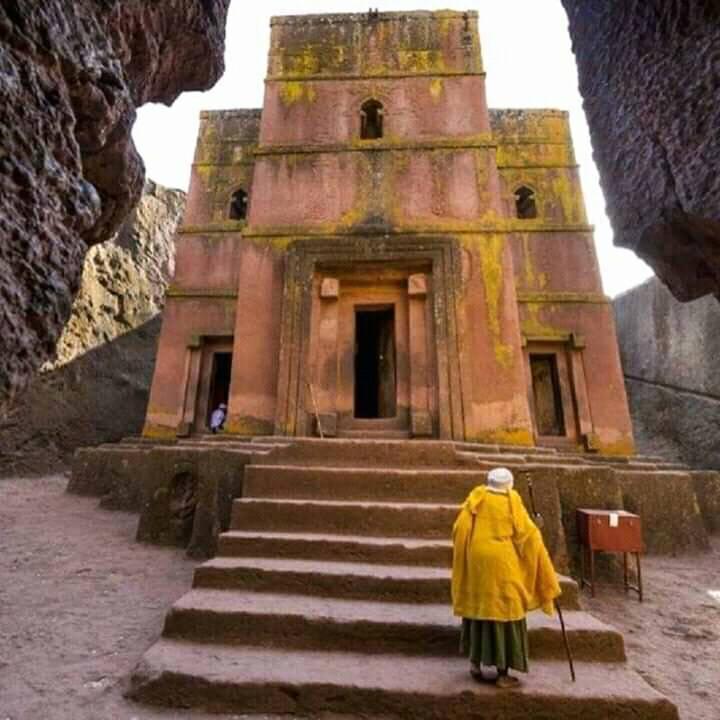
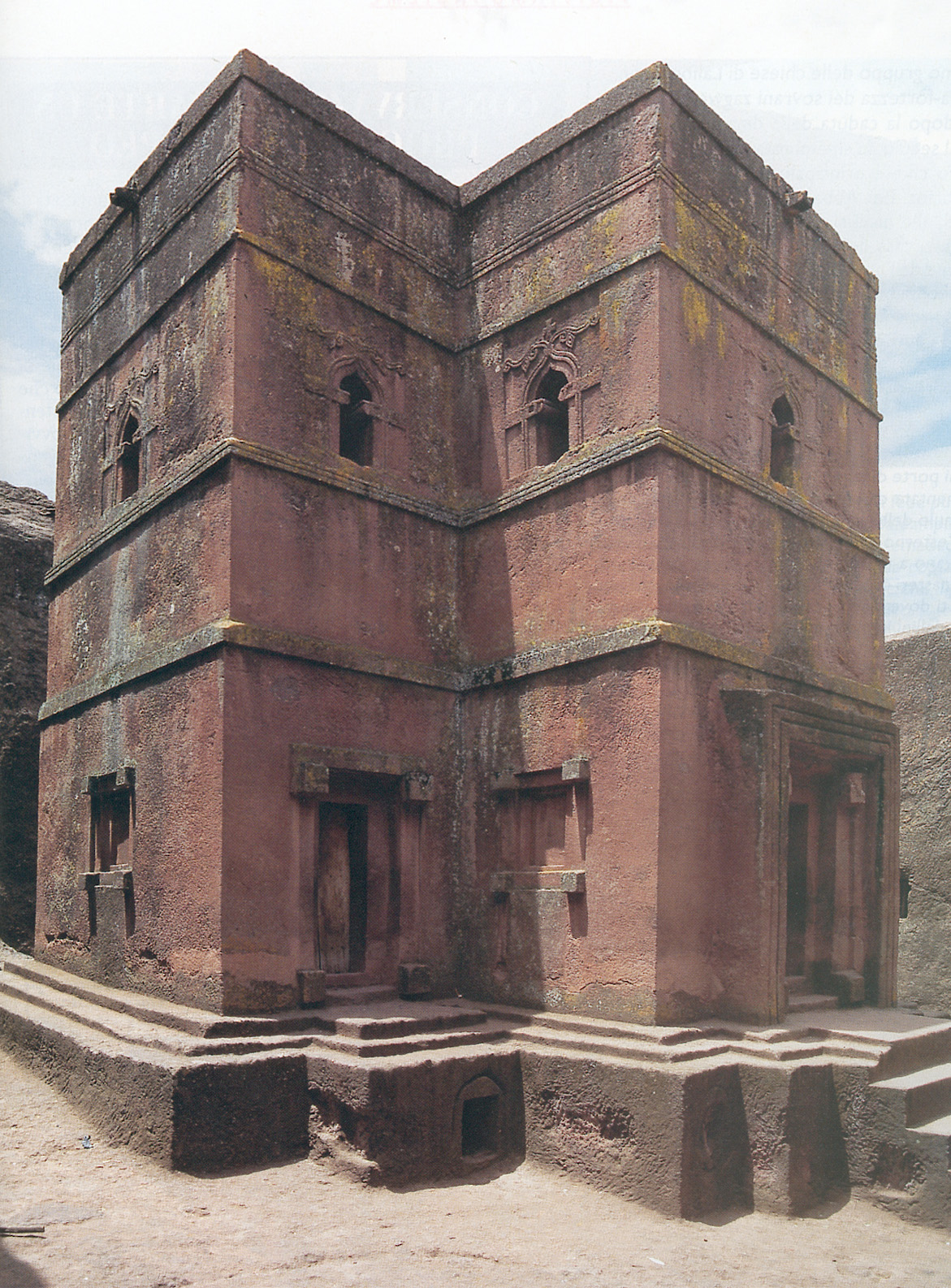
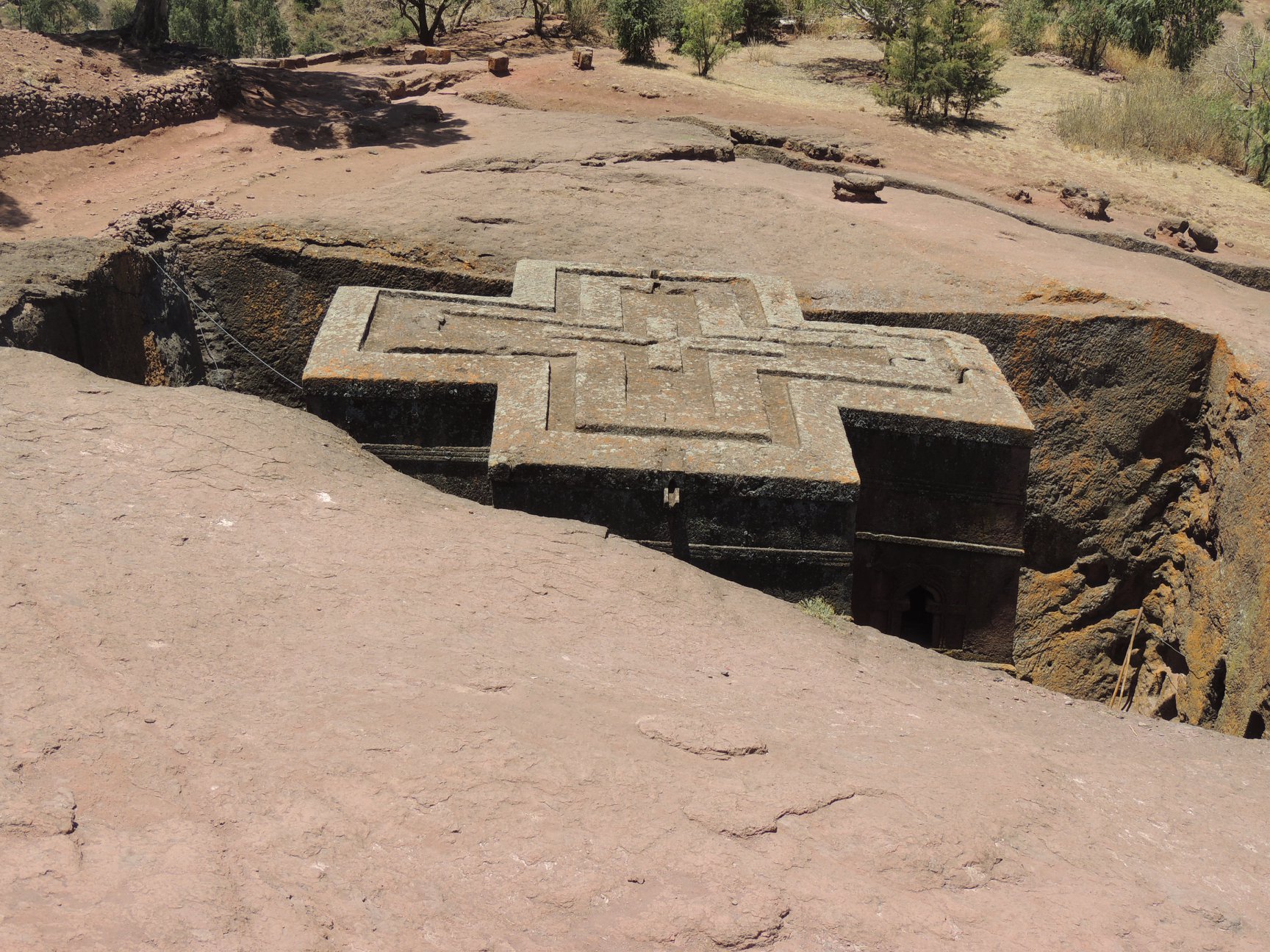
Bete Giorgis (House of St. George), Lalibela, Ethiopia
|
|
|
|
|
|
|
|
|
|
|
|
|
|
| |
|
|
|
|
| |
Orthodox Tewahedo
Orthodox: This a common name for both Eastern and Oriental Church. The word “Orthodox” comes from the Greek meaning,
“Right Praise”
Tewahedo: In the Ethiopian Orthodox Church, “Tewahedo” is the word used to describe the union of the two natures in Christ.
This actual work “Tewahedo” is maintained in the ancient Ge’ez language.
Orthodox Tewahedo: In the Oriental Orthodox Churches it is the concept of the union of two natures in Christ, called “Tewhaedo”
in the Ethiopian Orthodox Church, which distinguishes these churches from the rest of the Orthodox World. These Orthodox -
Tewahedo Churches are:
1. The Coptic
2. The Syrian
3. The Armenian
4. The Ethiopian
5. The Indian (Malabar)
6. The Eritrean
What kind of “Union” is “Tewahedo”?
The Ethiopian Orthodox Church believes and teaches that when the Word of God became man, the divine nature became the
property of the flesh, and the human nature became the property of the divine, and in this union there is one body and nature
The Word became flesh in the womb of the Virgin Mary and took possession of a human nature. In taking on a human nature the
Son of God the Father, His Word, is called the Son of St. Mary. In this union, “Tewahedo” the divine nature of Jesus, by the work of
the Holy Spirit became one body, one nature.
This Union (Tewahedo) can be seen in the following examples:
· Iron and Fire: When Iron is placed into a fire enflamed by bellows the iron seems as fire and the iron when struck by the hammer
is changed because of its unity with fire.
· Eye and Light: It is by the unity of light with the eye that things in darkness are seen.
· Purple and Gold: When Our Lady was living in the temple, she was spinning purple and gold. It is the symbol of the reconciliation
of two things.
The material she had been using is called Insert. It is an instrument traditionally used by any women to make cotton threads in
Ethiopia. It is made of Bamboo. Because Our Lady use this instrument in the Temple it acquired the name “Enko Bahery”. Our Lady
was spinning threads of purple and gold. These colors symbolize the unity of Divinity and Humanity incarnation. The gold
representing strength compliments the quality of the silk. They work in harmony to strengthen the qualities of the other. Together
they create a friendship that enhances the qualities of one another. In order to better see the finer special qualities of one, the
other must be present. Neither is restricted by the other.
Because of the incarnation, God the Son is omnipresent, and at the same time can be restricted in the womb of Our Lady St. Mary.
The gold gives strength to the silk while the silk expresses the gold’s quality and is a measurement for the strength of the gold. The
silk again has a hair-like coat and a fiber but the silk does not restrict the gold from shining. The gold’s shining doesn’t restrict the
beauty of the purple, Therefore, by the example of silk and gold, the incarnation of God, the unity of Divinity and Humanity is
expressed. It is thus clear that “Tewahedo” refers to a unity of natures formed by the union of two natures.
The Oriental Orthodox “Tewahedo” Churches believe that after the union of two natures there is in Christ one body and one
nature. That is to say that the divine nature while remaining full, infinite, boundless, Almighty, and the Bless still being finite,
tangible, came into unity, a union of one body, and one nature. In this unity, the nature of divine for flesh and the nature of flesh for
divine is shared with each other.
In this way the one who knew neither hunger or thirst, the immortal, in the unity of flesh hungered, became thirsty, was sick, died
rose from the dead and ascended into heaven, hunger, sickness and death, are experienced by the flesh and this flesh which
possessed the nature of the divine is raised from the dead and ascended into heaven.
The historical tag “Monophysite” given to the Ethiopian and to the other five Oriental Churches is a serious misnomer. How can
this belief that does not eliminate one nature by receiving another be called monophysite? John 1:14, 3:13, Ephesians4:9, 1Peter 3:
18 also as St. Cyril of Alexandria maintained it intelligently that Christ is “one incarnate nature of God the Word”
Glory and Praise be to God.
Source: Tsega Tekle Haimanot ~ FB post ~ 20 Mar 2020
|
|
| |
| |
|
|
|
Tsega Tekle Haimanot ~ 13 December 2020
Picture from the Cathedral of the Holy Trinity (Kidist Selassie) in Addis Ababa, showing Their Imperial Majesties Emperor Haile
Selassie I and wife Empress Menen Asfaw glorifying The Holy Virgin Mary and Jesus Christ.
"The Holy Trinity Cathedral was established on December 22, 1931, under the auspices of His Imperial Majesty Haile Selassie I.
But during the war of resistance against fascism, the construction was disrupted for five years (1935 - 1940). Through the help of
the Almighty, the construction had continued after liberation and was completed in 1943. And the Cathedral was officially
inaugurated on January 14, 1943."
|
|
| |
|
| |
|
| |
The 3 Zions
Depiction of Solomon's Temple
|
|
| |
Tsega Tekle Haimanot ~ 8 August 2019
"Christianity has flourished in Our country, keeping it's original features and character through the centuries. As a nation we have a
great debt to the church for Our cultural heritage." - Girmawi Qedamawi Haile Selassie
Musical Instruments of the Ethiopian Orthodox Tewahedo Church
***In this video there are three Musical Instruments of the Ethiopian Orthodox Tewahedo Church that can be seen being used.***
They are:
1. The drum which is known in Amharic as 'Kebero.'
2. The sistrum which is known as 'Tsenatsel.'
3. The praying stick, which is known as 'Maquamia'
Kebero
The drum called, Kebero in Amharic is a hymnal instrument used to praise God. “Praise Him with the drum and sistrum and
dance/rhythmical movement” (Psalms 150:4)
It is made of a light, big wood having a hollow cylindrical hemisphere, with leather parchment stretched over the open sides. The
outer part covered with colored textile material, tightly fastened with strong leather strings, and wound with scarlet hanger to
carry it on one’s shoulders.
·Kebero itself symbolizes the incarnate Lord Jesus Christ.
·The wider side tells the omnipresence of God.
·The narrow side signifies the incarnation.
·The covering piece of material is Christ’s scarlet robe.
·The leather strings – show the strips of flagellation left on Christ’s body.
·The hanger is the whip (scourges and rope with which they bound Christ’s hands;
·The Beat – the smack on Christ’s face with the palms of the soldiers.
The full picture of the drum/Kebero demonstrates the pain and agony of the cross of Our Lord Jesus Christ.
Mequamia/Prayer Stick
The wooden prayer stick is known as Mequamia in Amharic. It can be used for guiding and supporting. In the Ethiopian orthodox
Tewahedo Church in regular daily life, one can recognize the priests by the mequamia and hand crosses.
In the Church, as the services are lengthy Mequamia serves as a support for the clergy and elderly people to lean upon but the
most important use of it is to serve in song of St. Yared known as “Zemarie”. It could be used with or without the accompaniment
of kebero and tsenatsil/sistrum, particularly during the Lent.
Mequamia is a symbol of the Cross. At the time of singing known as “Zimame” the cantors, debteras in Amharic, raise it up high,
bring it down and move it sideways, to the right and to the left. This demonstrates Christ’s incarnation and carrying on the Cross.
The ups and downs of the mequamia commemorate:
·The coming down of the Son of God from heaven to save the world.
·The ascending to and descending from the Cross.
·The rod on top of which the few put a sour wine mingled with gall and put it to Jesus to drink.
·They beat Christ’s head with a stick.
As beating on the floor and raising up expresses the fall of Jesus Christ on the ground and standing up while carrying the Cross. It
also signifies His death and burial.
·Moving back and forth, left and right reminds the pushing and pulling of the Lord by the crucifiers.
The entire movement of the Mequamia are associated with the crucifixion story.
Christ’s incarnation, crucifixion, death, resurrection, ascension, and second coming.
*** What you are also seeing in this video is:
The celebration of the Feast of Teqetsel Tsige at the Guenete Leul Palace. Traditionally this church feast was celebrated in the
presence of the Emperor in front of his Palace. Emperor Haile Selassie held this celebration in front of the Guenete Leul and the
Jubilee Palaces, as well as the Imperial (Menelik) Palace.
One of the great traditions of the Ethiopian monarchy was the celebration of Teqetsel Tsige, or "Atse Meskel" as it was often
referred to. It is marked on Meskerem 10 and during the monarchy was celebrated with religious pomp before the Emperor,
usually in front of his palace.
"Tsige is the season of flowering that follows the rainy season. The word refers to flowers themselves. This flowering season is
used as a symbol of the flowering of faith.. The Old Testament of the Bible refers to the two great pillars on either side of the
entrance to the Temple of Solomon that were topped by figures of flowers. The Ethiopian Orthodox Church regards these pillars as
a foreshadowing of the Apostles Peter and Paul, and the flowers as the Christian faith they upheld and spread in the world. So this
season of flowering was used as a metaphor of the flowering and spreading of the faith.
This celebration is celebrated specifically on Meskerem 10 because that is said to be the date the large piece of the True Cross of
Christ reached Ethiopia during the reign of Emperor Dawit I (reigned 1382-1413). The Emperor had fought the Mameluk dynasty
of Egypt (some sources say he had reached as far as Aswan in his campaign against them) in an effort to stop the Muslim
oppression of the Copts and to free the Patriarch of Alexandria from detention. There are accounts that Dawit threatened the
Mameluk Sultan that he would divert the Blue Nile and starve Egypt if the Patriarch were not freed. The Patriarch in gratitude
asked the Emperor what he could do for him, and Dawit I asked for a piece of the True cross that was enshrined in Egypt. It is said
that the relic of the cross crossed the frontier and arrived on Ethiopian soil on Meskerem 10 and that as it was carried into the
country ulultating crowds greeted it everywhere holding flowers and torches (chibo). So Teqetsel Tsige is called "Atse Meskel" in
honor of Atse Dawit obtaining the relic of the cross during the period of Tsige, and is the reason that it was celebrated before his
successors until 1974." - Solomon Kibriye
|
|
Monastery of Narga Selassie (Rest of the Trinity)
|
|
|
|
|
|
Monastery of Narga Selassie (Rest of the Trinity) is a church on Dek Island. It's the largest island in Northern Ethiopia. It was
constructed by Empress Mentewab in the late 18th Century.
Mentewab (means in Amharic, "How beautiful.")
Mentewab's Baptismal name is Walatta Giorgis, which means, "Daughter of Saint George." Throne name: Berhan Magassa (which
means, Glorifier of Light) From the House of Solomon, her coronation was on December 23, 1730, where she became Empress of
Ethiopia. She was the consort of Emperor Bakaffa. She was the mother of Iyasu II(whose was also known as Berhan Seged, which
means, "He to whom the Light bows") and grandmother of Iyosas I.
Mentewab built several significant structures in Gondar including her own Castle in the Royal Enclosure and a large banqueting
hall as well. Most significantly she built a church dedicated to the Virgin Mary at Qusquam(named for a site in Egypt where the
Holy Family had stayed during their exile) in the mountains outside of Gondar.
Source: Malachi ~ FB post ~ 13 August 2020
|
|
| |
The 3 Zions
Cathedral of Our Lady Mary of Zion ~ Pre-1950
|
|
Cathedral of Our Lady Mary of Zion, built during the reign of Emperor Fasilides
|
|
Ali Jackson A better view of the Old Saint Mary of Zion Church in Axum Ethiopia.
The Conquering Lion of the Tribe of Judah who represents the return of Christ Jesus in fulfillment of Biblical prophecy of his
second coming to rule again as his fathers David & Solomon had.
Since the 4th century AD, all Ethiopian sovereigns give their Crown to the Church of St Mary of Zion in traditional adherence and
submission to this belief. At the top of the stairs in front of the Old St Mary of Zion Church in Axum is the Throne Stone where the
coronation of 261 Aksumite kings took place.
Traditionally monarchs of Ethiopia could not employ the title of King of Zion unless the monarch was crowned in Axum at the Old
St. Mary of Zion church in Ethiopia. Another way to achieve access to use this "King of Zion" title a monarch not crowned in Axum
could simply donate his Imperial Crown to the custodianship of the priests at the church of St. Mary of Zion in Axum.
Source: Ali Jackson ~ FB post ~ 06 April 2020
|
|
|
Ali Jackson That was exactly what was taking place in this particular photograph I'm posting.
Emperor Haile Selassie I & Queen Menen Asfaw were both crowned in the same ceremony at Saint George's Cathedral in Addis
Ababa Ethiopia on November 2, 1930 not in Axum Ethiopia. But Janhoy later decided to dedicate the original Imperial crowns to
the custody of the Old Church of Our Lady Saint Mary of Zion Church in Axum Ethiopia. The 2 Imperial crowns can be seen in the
picture placed on top of the old stone throne which is a permanent feature at the Old Saint Mary of Zion church.
This object wrapped in cloth in this photograph is not the Ark of the Covenant as many erroneously believe it to be. No, it is not the
Ark but the stone coronation throne on which 261 Axumite kings were crowned in the past.
Source: Ali Jackson ~ FB post ~ 06 April 2020
|
|
|
| |
The 3 Zions
Cathedral of Our Lady Mary of Zion ~ 1950+
|
|
| |
|
Ali Jackson The New Church of Our Lady Saint Mary of Zion in Axum Ethiopia built by Janhoy & he also built the Chapel
of the Ark of the Covenant in Axum next to the Old Church of our Lady Saint Mary of Zion.
There is also now a new & bigger chapel of the Ark of the Covenant in Axum next to Janhoy's Old Chapel of the Ark of
the Covenant in Axum next to the Old Church of our Lady Saint Mary of Zion.
Source: Ali Jackson ~ FB post ~ 06 April 2020
|
|
|
|
|
|
Nothing is hidden from God's view!...
|
|
|
|
Copyright © 2011-2020 UMOJA Connection, Inc.
All rights reserved.
|
|
|