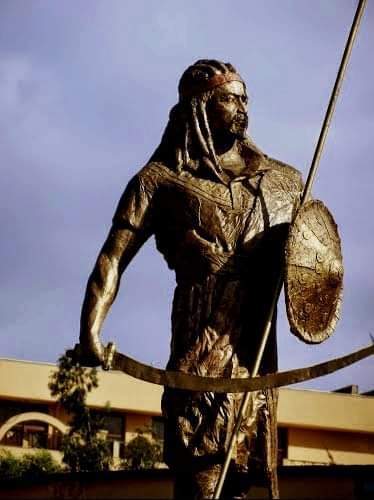
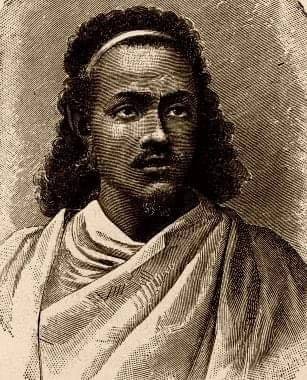
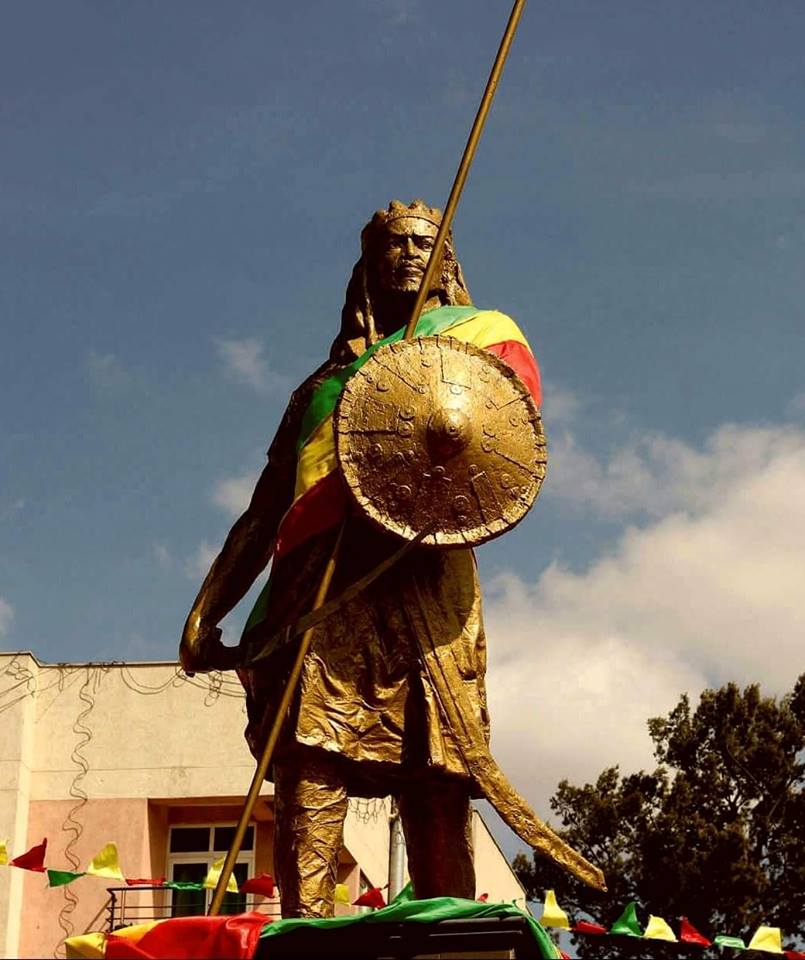
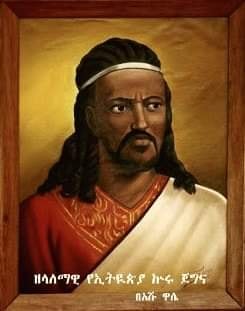
Emperor Tewodros II (con't)
|
|
Happy Birthday Emperor Tewodros II!!!
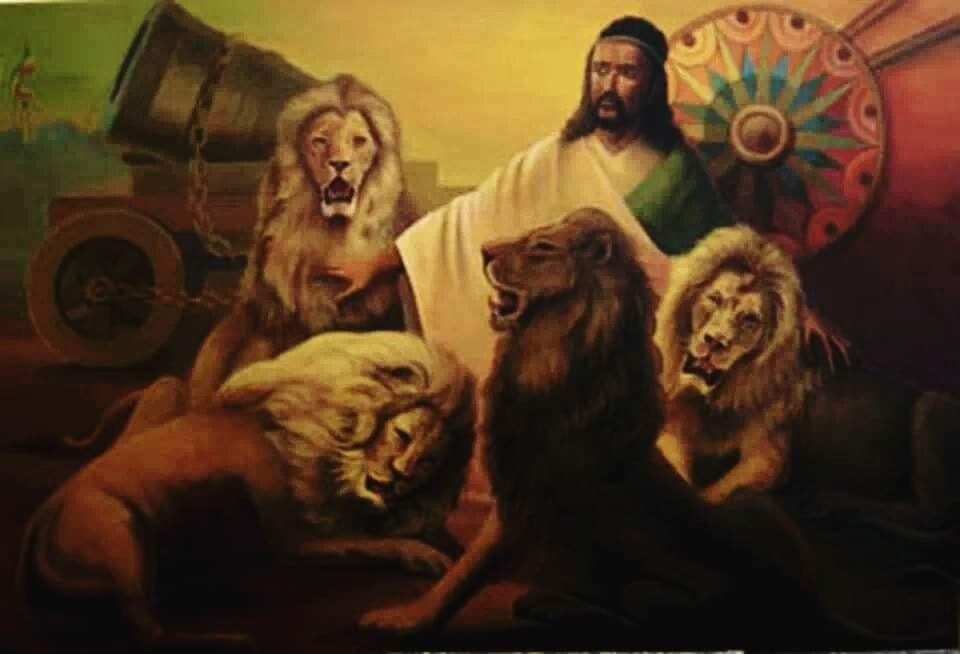
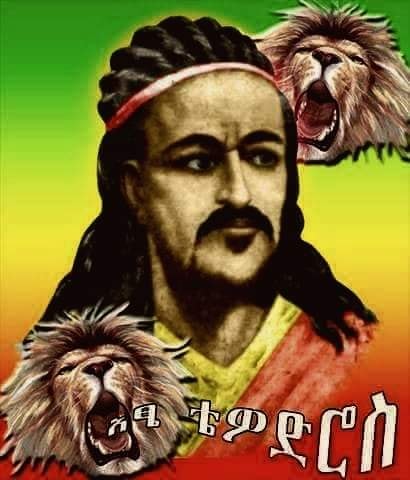
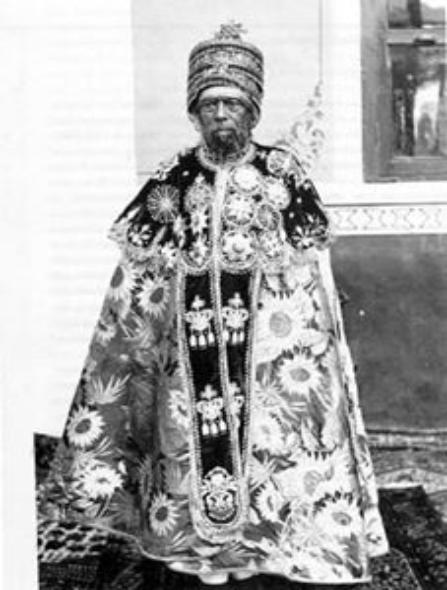
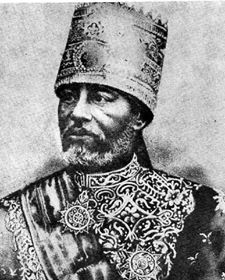
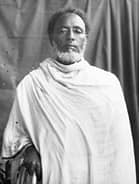
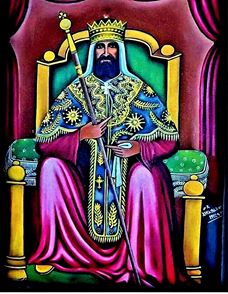
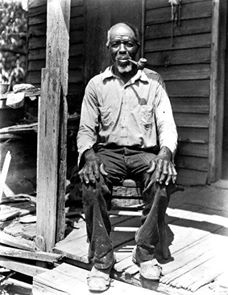
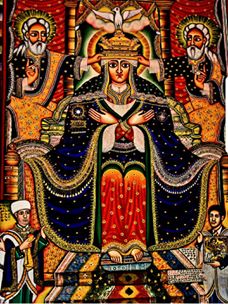
Emperor Tewodros II, baptized as Sahle Dingil, was born Kassa Haile Giorgis, but was more regularly referred to as Kassa Hailu.
His rule is often placed as the beginning of modern Ethiopia, ending the decentralized Zemene Mesafint(Era of the Princes). He
sought to reestablish a cohesive Ethiopian state and to reform its administration and church. He did not initially claim Solomonic
lineage but did seek to restore Solomonic hegemony, and he considered himself the Elect of God. Later in his reign, suspecting that
foreigners considered him an upstart and seeking to legitimize his reign, he added "son of David and Solomon" to his title.
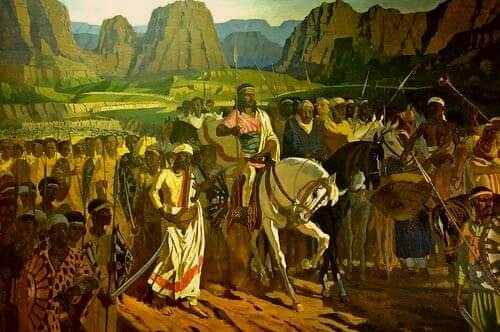
Tewodros II never realized his dream of restoring a strong monarchy, although he took some important initial steps. He sought to
establish the principle that governors and judges must be salaried appointees. He also established a professional standing army,
rather than depending on local lords to provide soldiers for his expeditions. He introduced the collection of books in the form of a
library, tax codes, as well as a centralized political system with respective administrative districts. He also intended to reform the
church, believing the clergy to be ignorant and immoral, but he was confronted by strong opposition when he tried to impose a tax
on church lands to help finance government activities. His confiscation of these lands gained him enemies in the church and little
support elsewhere. Essentially, Tewodros was a talented military campaigner who is remembered as one who sought to unify and
modernize Ethiopia.
May God bless his memory eternal. ��
|
| |
Queen Ranavalona III
(1861 - 1917)
|
|
QUEEN RANAVALONA III
LAST RULER OF MADAGASCAR
(1861-1917)
|
|
|
| |
| |
H.I.H. Prince Sahle Selassie Haile Selassie
(1932 - 1962)
|
|
|
|
|
|
|
|
|
|
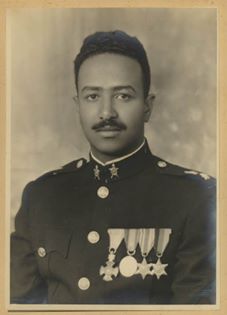
Prince Sahle Selassie (February 27, 1932 - April 24, 1962) was the youngest child of Emperor Haile Selassie and Empress Menen
Asfaw of Ethiopia. His full title was "His Imperial Highness, Prince Sahle Selassie Haile Selassie".
Born after his parents had been crowned Emperor and Empress of Ethiopia, he was the only one of the Emperor's children to have
been born with the title of Prince. Since his older brothers, Prince Asfa Wossen and Prince Makonnen, had both been born before
the 1930 coronation, Prince Sahle Selassie was also the first legitimate child born to a reigning Emperor since the birth of
Dejazmach Alemayehu Tewodros, son of Emperor Tewodros II.
Prince Sahle Selassie was married to Princess Mahisente Habte Mariam, the daughter of Dejazmach Habte Mariam
Gabre-Igziabiher, the heir to the old Oromo kingdom of Leqa Naqamte in Welega Province, and later served as governor of Welega
province. They had a son, Prince Ermias Sahle Selassie, who currently is the President of the Crown Council of Ethiopia. The Prince
was a man of an artistic bent, who is said to have made a movie which was banned from publication by the Imperial Government
censor despite the fact the Prince was a member of the Imperial family. It was believed that the movie indirectly questioned the
fast pace of development, and the strains it caused on rural society, and was thus unflattering to the policies of the Imperial
government.
Prince Sahle Selassie died in 1962, months after the death of his mother Empress Menen Asfaw. He was survived by his wife and
his son Prince Ermias, and was buried in the crypt of Holy Trinity Cathedral in Addis Ababa.
|
|
|
|
|
| |
|
IN THE NAME OF THE FATHER AND THE SON AND THE HOLY SPIRIT,
ONE GOD. AMEN.
Enquan Le Leeq Melak Qidus Mika'el Beal Aderasachu!!!
Happy Monthly Feast of the Archangel St. Michael!!
On this day (February 19) is commemorated the glorious angel, Michael
the Archangel, for on this day God sent him to Samson the giant and
helped him until he conquered the Philistines. They wanted to kill him,
and God gave him power over them, and he blotted them out and in one
day killed of them ten hundred with the jaw bone of an ass. And when he
was thirsty, and nigh to die, Michael the Archangel appeared unto him,
and strengthened him, and God made water to flow out from a jaw bone,
and he drank and was saved. And when a crowd of the Philistines
assembled, and devised a scheme against him with his wife, and blinded
his eyes and took him into the house of idols, the angel Michael
appeared unto him and gave him strength and he killed them.
Judges 15 & 16
Salutation to the Archangel Michael, the head of the host of heaven.
Source: FB Post 02-19-2019
|
|
|
| |
|
|
|
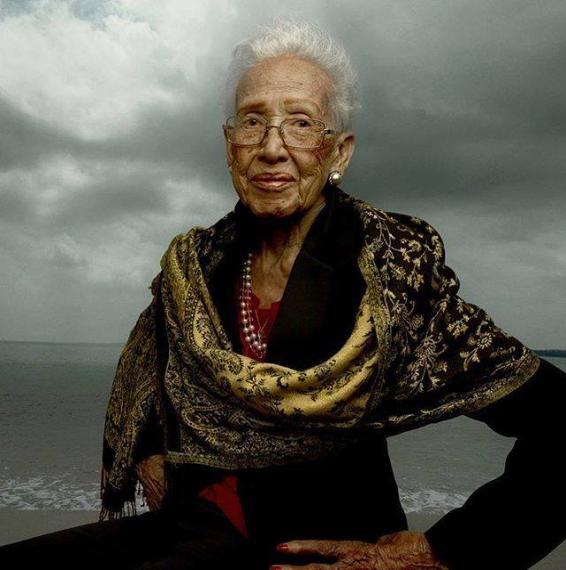
Recently celebrated: Happy 100th Birthday (2019) to Dr.
Katherine Johnson, NASA human computer who
calculated trajectories for the Apollo space missions by
hand. The @NASA mathematical genius was honored on
Saturday with a statue and scholarship by her alma
mater @WVStateU ...She attended the school at the age of
14. She excelled as she obtained her degrees in
Mathematics and French, and pursued graduate degrees
there as well.
“So what can you say after a century about someone like
Dr. Katherine Coleman Goble Johnson - our very own
global genius? ...Let’s see - you say nothing. You don’t say
anything. You listen.
Source: Mel Thomas FB Post 28 August 2018
|
|
|
|
| |
|
St. Christos Semra was born, brought up and educated in Shoa region at
the place called Bulga. She was involved in religious activities about
1420 E.C. during the reign of Yesak (Gebre Meskel). She was a married
woman and had 12 children. Of course, she was quite rich in the secular
world but she was not interested in the richness of this world at all. She
abandoned everything she had and committed herself to be a hermit. As
the Bible says, "whoever comes to me cannot be my disciple unless he
hates his father and his mother, his wife and his children, his brothers
and his sisters, and himself as well."
Luke 14:26.
First she went to Debra Libanos Monastery to pray for a number of
years. Later on she went to Begemder province at the place called Lake
Tana and stayed there for a long time. She prayed day and night
reflecting on the passion of Christ. She had twenty-two years Monastic
life experience in helping old people and serving in the Monastery. By
this she came very close to God.
According to her biography it is said that she insisted with God to forgive
Satan. The reasoning behind her thought was that reconciliation
between Satan and God would bring everlasting peace to the human
race on earth. As Satan is known as the cause of sin, it is a good idea to
dry up the source of evil thing in peace.
As the Bible says, "happy are those who work for peace among men; God
will call them His sons." Matthew 5:9
By the way, what do we learn from this history? Our mother St. Christos
Semera taught us a philosophy of coexistence which we need to practice
today.
This most beautiful figure of a holy woman presented a great
contribution to the world and history.
And she is an unusual figure in the history of Saints. Because this
teaching was not taught before by the Saints. She was given the name
"Mother of peace." Her contribution as a woman, a wife, a mother, a
widow and a religious was extraordinary. May the dynamism and
authenticity of her life be an example in our day and for generations to
come of what women can and must accomplish, in the fulfillment of their
role, for the good of humanity. For this reason the Ethiopian Orthodox
Tewahedo Church built a Monastery called by the name of St. Christos
Semera in Begemder province at the place called Foger. The Ethiopian
Orthodox Tewahedo Church celebrates the feast of St. Christos Semera
every year on May 12th E.C. Christos Semera was canonized by the
E.O.T.C , and in her we have a great example, not only for women, but for
all Christians in the following of Christ Jesus Our Lord.
Let the blessings of Our Mother St. Christos Semera be with us. Amen!!!
Source: Tsega Tekle Haimanot ~ FB Post 03-21-2019
|
|
| |
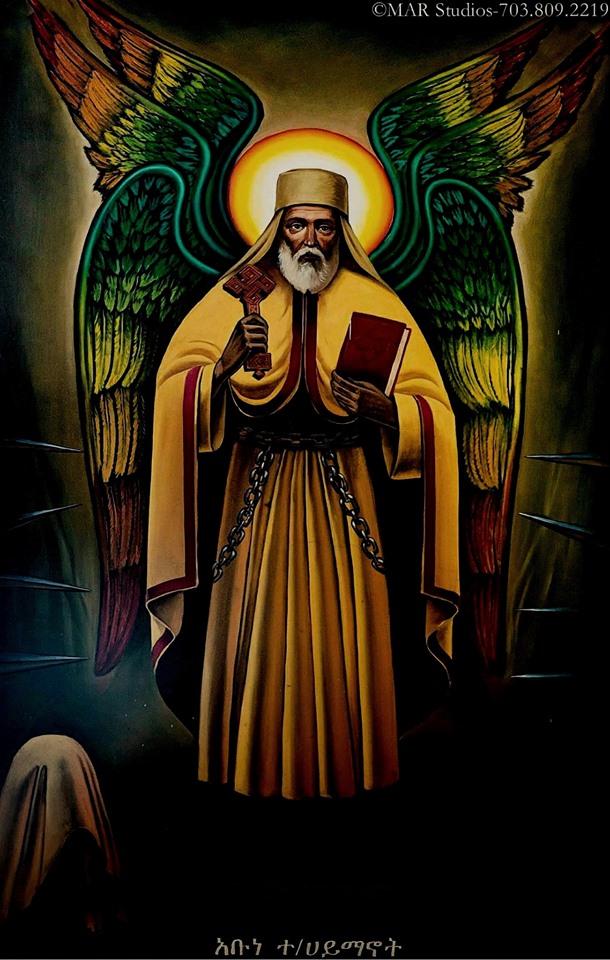
Saint Abune Tekle Haimanot
|
|
|
|
በስመአብ ወወልድ ወመንፈስ ቅዱስ አሃዱ አምላክ አሜን።
Enquan Le Abune Tekle Haimanot Beal Aderasachu!!!
Saint Abune Tekle Haimanot is one of Ethiopia’s greatest Saints.
His name Tekle Haimanot in translation means “Plant of the
Faith” (Tekle = Plant of & Haimanot = The Faith). He was an
Ethiopian monk who founded the Debre Libanos Monastery in
his native province of Shewa. He stands out among all the other
Saints of Ethiopia as he is the only one popular both in and
outside of the Country. He also is the only Ethiopian Saint to be
celebrated officially in foreign churches such as Rome and Egypt.
His feast day is August 17, and the 24th day of every month in the
Ethiopian Calendar is dedicated to Tekle Haimanot.
The family of Saint Tekle Haimanot is said to come from the line
of Saints and clergymen. His father was called Tsega Ze Ab and
his mother Egziharia and his birthplace is said to be from Shewa
province (Bulga) in the place which is called Debre Tselalesh.
It is said, the father and mother of Saint Tekle Haymanot, while
waiting for a long period of time, offered their prayers to God
asking Him to grant them a child, since they did not have a child
before. Once upon a time, the Archangel Saint Michael came to
them in revelation and said, “You will bear a child who will be the
light of the world and change the ways of Gentiles to believe in
God.” Based on the annunciation of the Archangel, Saint Abune
Tekle Haimanot was born from his mother Egziharia on 24th of
December in 1197 E.C. (Ethiopian Calendar).
Since Abune Tekle Haymanot was blessed from the womb of his
mother and he was filled with the glory and mercy of God from
his baby stage, he had praised his Creator and said,
“One God is Holy, and One Son is Holy, and One Holy Spirit is
Holy.”
During his childhood, there was a famine in the country. Due to
this, his mother Egziharia worried because she did not have a
crop for the preparation of Saint Michael holiday. Seeing his
mother upset, the child Tekle Haymanot pointed with his hand to
a basket, where inside there was a little pan and a little oil in a
pot. By now his mother Egizharia said, “What did this child say?”
and she had supplied him with a little flour, which was there
inside a basket as well, and a little oil, which was inside a pot.
Now, the child Tekle Haymanot crossed himself and said, “In the
name of the Father, and of the Son, and of the Holy Spirit. One
God.” After that, when he put his hand into a pot which contained
a little oil inside it and to a basket which contained a little flour
inside it, it became full of twelve baskets and twelve pots. By this,
Tsega Ze Ab and Egziharia celebrated the holiday of Saint
Michael and gave satisfaction and pleasure to the poor by giving
food to each on that day.
May the Grace and Blessing of Saint Tekle Haimanot be with Us.
Amen.
|
| |
Saint Abba Giorgis Ze Gasicha
|
|
IN THE NAME OF THE FATHER, AND THE SON, AND THE HOLY
SPIRIT. ONE GOD. AMEN.
Saint Abba Giorgis Ze Gasicha
The Great Ethiopian Orthodox Scholar
The great Ethiopian Scholar Abba Giorgis (George) was born in 1358 E.C.
(Ethiopian Calendar) in Wollo administrative region, Borena District, at
the place called Shela from a Christian family. Previously his parents
were told by the Angel that they would have a child, and they would call
their son by the name of St. George.
When he reached the age of education, his father sent him to a Pastor
called Sereke Berhan to educate him. For seven years, he was unable to
study even the alphabet and then he was given back to his father to find
him an alternative job. But his father made him return to the same
school and get on with it because he promised him to God thereafter.
While Abba Giorgis (George) was eagerly following his study, which
would qualify him for monastic life at the Hayq Monastery, he got
unhealthy remarks from his fellow monks with which he became
disappointed.
Soon he presented himself in the Church and bowed to the picture of Our
Lady, the Virgin, St. Mary and proceeded until he got a great blessing and
inspiration from her Son Jesus Christ Our Lord. Then, by the grace of
God, Abba Giorgis (George) became full of knowledge and became a
famous author. His dedication to Our Lady the Virgin, St. Mary, was so
great that he could write numerous books which glorify the Holy Virgin
St. Mary.
|
|
Some of his books are the following:
1. The Door of Light: (Anketse Birhan)
2. Metsehafe Arganon (A Praising of St. Mary)
3. Enzira Sebhat (A Praising of St.Mary)
4. Hiwote Maryam (The Life of St. Mary)
5. Metsehafe Birhan (Saatat)(a kind of prayer book which is to be used every day and night)
6. Metsehafe Mistyr (A book of Mystery containing arguments and evidences about the divine Mystery)
The sixth one is a sophisticated work which consolidates both the Old and the New Testaments. In this book Abba Giorgis (George)
made a great intellectual contribution to the theological and moralistic world.
Therefore, King Yeshak at this time called Abba Giorgis (George), “Cyril of Ethiopia and Pillar of Religion.” This book is translated
into different languages by Overseas Christian Missionaries.
7. Wudassae Meskel (Praising of the Cross)
8. Teamino Kidusan (Dedication to the Saints)
9. Kibre Kidusan (Praising of all Saints)
10. Tselote Fetito (A Prayer of blessing of the Holy Communion)
11. Tselote Zebeatebet (A kind of prayer which is to be prayed while getting in and out from home)
12. Tselote Maede (A Prayer which is to be prayed during a meal)
In addition, he has presented various writings regarding the doctrine of the Church and how to celebrate the days of the Saints. In
general, it is admitted that he wrote more than 40 books altogether. He was also famous for preaching the Gospel and teaching
religious subjects in the traditional school at a higher level until he died on Sunday July 7 1417 E.C. (Ethiopian Calendar) at the age
of 60. For instance, King Zera Yacob was one of his students. To finish with, Abba Giorgis(George) was and is a unique scholar of
the Ethiopian Orthodox Tewahedo Church, next to St. Yared who came into existence in the sixth century and who was the author
of the incomparably compiled compositions known as, “Deggua”. He was also one of Our Church nationwide saints and in his name
a district Monastery was established.
Let the prayer and blessing of Saint Abba Giorgis (George) be with us and keep Our Mother Ethiopia in peace.
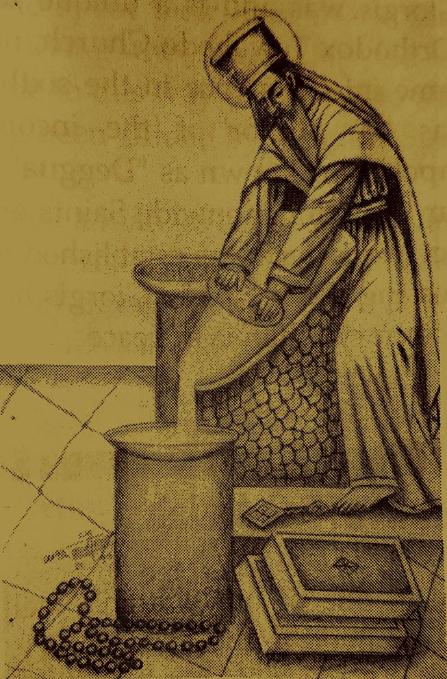
Photo: St. Abba Giorgis serves the monks who are the servants of Christ
Source: Tsega Tekle Haimanot ~ FB post ~ 10 Oct 2019
|
| |
|
Today is the Birthday of the late Ethiopian surgeon, political activist, and
the modern champion of Ethiopianism and Ethiopawinet.
Asrat Woldeyes (June 20, 1928 – May 14, 1999) was an Ethiopian
surgeon, a professor of medicine at Addis Ababa University, and the
founder and leader of the All-Amhara People's Organization (AAPO). He
was jailed by the Derg and later by the Ethiopian People's Revolutionary
Democratic Front (EPRDF). After his death, The Guardian described him
as "successively Ethiopia's most distinguished surgeon, physician and
university dean, most controversial political party leader and best
known political prisoner".
Woldeyes' early life was spent without parents. His father was among
thousands executed during a vengeful Italian retribution massacre in
1937. His mother would die shortly afterward.
Asrat studied medicine at the University of Edinburgh, becoming the first
Ethiopian to qualify as a surgeon in the West. Woldeyes would return to
Ethiopia in 1965 to help found Ethiopia's first medical college and would
serve as Emperor Haile Selassie's personal physician until his 1974
death. Following the 1974 Ethiopian Revolution, Woldeyes was placed
under strict house arrest for his reputation as an outspoken critic of the
communist regime. He would later testify against the former regime in
regards to the suspicious factors in the Emperor's death. Woldeyes
remained an outspoken political critic, founding the All Amhara (Free
People) Peoples Organization. He would be repeatedly detained for his
often fiery statements.
He continued teaching and practicing medicine throughout the rule of
President Mengistu Haile-Mariam.
When Meles Zenawi succeeded Mengistu in 1991, Asrat became an
active critic of the government, particularly of Meles' formation of new
autonomous regions in Ethiopia. He then formed his own political party,
the AAPO, with a central tenet of restoring Ethiopian unity. In 1994, he
was sentenced to two years in prison for "planning violence against the
state". International human rights organizations protested the evidence
against him as unsound, and Amnesty International named him a
prisoner of conscience. He was later convicted of more charges,
extending his sentence by an additional three years. In 1996, Asrat faced
a new trial which was repeatedly adjourned, keeping him in prison
indefinitely.
In 1998, Asrat, who had previously had bypass surgery, developed
further heart problems, and government doctors stated that he needed
treatment overseas to survive. However, the Ethiopian government
initially denied him permission to travel, triggering international
appeals on his behalf. On December 25, 1998, authorities yielded to
international pressure, granting him a compassionate release and
allowing him treatment in Houston. Though his treatment was at first
successful, Asrat died five months later of his heart ailment at the
University of Pennsylvania hospital in Philadelphia.
His funeral was attended by tens of thousands in Addis Ababa that
included members of the royal family, foreign dignitaries, and even
members of the his opposition in a show of Ethiopian solidarity.
Source: Tsega Tekle Haimanot ~ FB Post 21 Jun 2019
|
|
| |
King Cetshwayo Ka Mpande
(1826 - 1884)
|
|
HELLFIRE? I EAT HELLFIRE - King Cetshwayo Ka Mpande ( 1826 -
1884). Last King of an independent Zulu State.
He famously led the Zulus to victory against the British in the battle of
Isandlwana ( 1879 ). He then banished all European Missionaries from
his land, who were nothing but tools of imperialism's mind control
project.
One of them had tried to convince him that he would end up in hellfire if
he opposed British ambitions. Cetshwayo replied " Hellfire?. I eat
hellfire!". He then ordered his warriors to consume a burning bush,
which they did with much glee and enthusiasm. He then turned to the
duplicitous missionary and said " I told you. I eat hellfire"
|
|
| |
General Amane Michael Andom
|
|
General Amane Michael Andom was Eritrea/Ethiopian Patriot, and from
a prominent family one of seven siblings. He was a young man during
the Italian invasion but joined the modern Ethiopian army in 1943. He
went to participate in Korean War in 1950 to 1953. He became the
commander of 3rd division Eastern command in Harer. He successfully
repelled Somalia aggression in 1964. It is the Emperor stern instruction
that stop Aman from going into Mogadishu. In 1974 at the start of
chaotic Ethiopian revolution, he was named the first chief of the Derge.
He tried to find a peaceful solution for the Eritran conflict and for that
effort he was accused as siding with Eritreans. Mengestu Hailemariam
The Arctiect of his murder tried to arrest him on November 22,1974
from his residence.
Being a great soldier and one of the finest General Ethiopia produced.
General Aman Andom fought the trifling soldiers to the bitter end and
when he run out of bullets he took his own life. Those coward soldiers
were so scared to see what was inside the house of a fallen hero, that
they drove Abrasion tank into his living room. Pride of Eritrea and pride
of Ethiopia. ( picture courtesy of Aida kidane)
Source: Mel Tewahade ~ FB Post ~ 19 Jul 2019
|
|
|
| |
|
Blessed Earthday Emperor Menelik II
Sabbath Blessing
שבת ברכת
Blessed 175th (August 17, 2019) Earth-Strong Anniversary of Great
Emperor Menelik II. Born August 17, 1844 . Angolalla Tera, Ethiopia.
Was an I-standing figure. Known for the famous biblical Prophecy, " the
battle of Adawa " , Ethiopia first victory over Rome.
Revelation ch 12 .
The Sun clothed woman with , the moon under feet and upon Her Head a
crown of 12 stars. who was in pain ready to deliver her man Child , who
was to get caught up to the Almighty and His Throne. A great red dragon
, was after Her to destory Her and Her Man Child as soon as He was born .
It was Emperor Menelik II, His wife and Ras Makonnen , with the
Ethiopian Army that crush the Romans and protected the Baby Lij Tafari
( Qedamawi Haile Selassie ) from being devoured. Baby Lij Tafari
Makonnen was only 4 year at that time .
Hail Hail Hail Emperor Menelik II, a great and mighty warrior. One that
fought for the Liberty of , not only Ethiopian people, but all African
people.
Source:
|
|
| |
|
The head of this prominent Maroon leader was severed by the French in
1791 for leading the Haitian revolution.
(Face2Face Africa - face2faceafrica.com)
According to many accounts, the killing of Dutty Boukman – the severing
of his head and having it displayed publicly by the French – was proof of
the huge clout that he wielded as a great leader behind the slave
uprising known as the Haitian revolution.
Source: African Kings & Queens Awake II ~ FB Post ~ 4 Sep 2019
|
|
|
| |
|
|
|
In memory of Negus Mikael, King of Wollo.
By Solomon Kibriye
This week marks the 100th Anniversary of the death of Negus Mikael, King of Wollo and overlord of Northern Ethiopia. May his
soul Rest In Peace. His history is long and complicated so this post will be about the circumstances around his rise to power and
briefly his fall.
Born in 1850 as Mohammed Ali, a son of Ali Liben Abba Bula and Woizero Gete Gebalo. He was born into one of the great
aristocratic families of the Muslim faith in the Ethiopian Empire, the Mammadoch Clan of Warra-Himano in what would later be
known as Wollo. The Mammadoch boasted a very illustrious ancestry, tracing their family back to Nur Hussein, a grandson of the
Prophet Mohammed by his daughter Fatima. This clan’s power had risen to great heights in the region, particularly during the
Zemene Mesafint in the 1700s. Their great rivals in the region were the Weresheik clan of Yejju, who for most of the Zemene
Mesafint provided the hereditary Enderase-Re’ese Mekwanint (Regent-Head of the Nobility) who ruled from Gondar in the name of
the puppet Solomonic Emperors of the day. The Weresheik dynasty of Princes, unlike the Mammadoch, had converted to Orthodox
Christianity (but mostly keeping a tradition of Muslim names) while the Mammadoch had mostly kept to Islam. Although there
were several marriages between the clans to the point that there were eventually several blood ties, their rivalry would survive
into the 20th century.
Liben I (Liban Amede) was the Mammadoch ruler who established himself as Imam and virtual King of Warra-Himano in the early
1800s. Before his death he produced three sons and a daughter. Amede, Ali, Bashir, and Menen.
Of these children of Liban I, the most famous is probably his daughter, the formidable Empress Menen Liben Amede. Her first
marriage was to Alula of Yejju, a Weresheik Prince by whom she had a son Ras Ali II, who would become the last Weresheik
Enderase-Re’ese Mekwanent of the Zemene Mesafint era. When her son rose to power, he compelled the puppet Emperor
Yohannes III to marry his mother Menen making her Empress. This mother and son team were the real powers while Yohannes III
simply presided as a symbol. Ras Ali II’s daughter would marry the man who would over throw them, Emperor Tewodros II, and
was his adored wife Empress Tewabech Ali.
However for purposes of our story the most important are two of Liban I’s sons, Amede Liben (known by his Horse Name “Abba
Muja)and Ali Liben (known by his “Horse Name” Abba Bula). Ali was our Mohammed’s father, and Amede his uncle. Ali Abba Bula
succeeded his father as Imam but died in He was succeeded by his brother Amede Abba Muja who died a couple of years later.
Here things got sticky. Imam Amede’s son succeeded briefly as Imam Liben II but died two years later. Liben II left an infant son,
Amede Liben (known as Abba Watew) who was proclaimed Imam of Warra-Himano. However another child, Amede Ali, son of Ali
Abba Bula (and half-brother to our Mohammed Ali) was also proclaimed Imam. Thus the adherents of these two child cousins
formed two camps and went to war. Imam Amede Liben Abba Wattew was championed by his powerful mother Woizero
Mestawot while Imam Amede Ali was championed by his powerful mother Woizero Workitu. Mohammed Ali adhered to his step-
mother Workitu and his half-brother Imam Amede Ali. These two women Workitu and Mestawot fought a bitter war of succession
against each other. However a new player arrived on the scene. Tewodros II seized the Imperial throne and deposed the
Weresheik Enderase Ras Ali II and his mother Empress Menen. Having deposed their aunt and cousin, the Emperor turned his
attention to Wollo and launched a fierce campaign to bring it under the full control of the revived imperial power and attacked the
armies of both claimant Imams and routed their Armies. Mestawot was able to escape capture with her son, and continued to fight
both Tewodros II and her rival Workitu, but Workitu suffered a great loss when her son Imam Amede was captured along with
several of his nobles by the Emperor and imprisoned on top of his new mountain fortress in the heart of Wollo, Magdala. Workitu
and her army encamped near Magdala waiting for the opportunity to free her son. Tewodros ordered the boy baptized and stood
as his godfather. Workitu was headed for heartbreak. When Menelik of Shewa (later Emperor Menelik II) escaped from Magdala
and took refuge in Workitu’s camp an enraged Tewodros II ordered the little Imam Amede Ali and his nobles executed. They were
thrown from the cliffs around Magdala. Workitu was devastated and indeed the entire country was shocked at the murder of this
boy by the man who had just become his godfather. It helped solidify the spreading revolt against Tewodros II. Workitu became an
ally of Menelik while our Mohammed Ali took up the claims of the dead Imam Amede Ali and continued to fight against Imam
Amede Liben and his Mother Mestawot.
With the defeat of Tewodros II by the British in 1868 and the brief reign of Tekle Giorgis II Wollo was inconstant flux. However it
became obvious that Mohammed Ali (now known as Abba Shanqo) had the upper hand over Mestawot and Amede Abba Watew. It
was Yohannes IV however who emerged from the disorder as Emperor of Ethiopia by defeating Tekle Giorgis II. Menelik of Shewa
had also claimed the Imperial throne and exerted Shewan overlordship over Wollo. However he found it prudent to submit to
Yohannes IV and to formalize their truce Yohannes and Menelik called the Council of Borumeda after Menelik submitted to the
Emperor and Yohannes IV recognized his kingship of Shewa and overlordship of the south of the Empire. Borumeda was called
mainly to resolve doctrinal disputes within the Orthodox Church. The Sost Lidet heresy which had spread in Shewa was
suppressed. There were other agreements however that were reached however. Yohannes IV ordered that the Muslims of Wollo
convert to Orthodox Christianity or lose their lands. The reaction was swift on the part of the people of Wollo many of whom did
convert but many bitterly resisted. No small number of Wollo Muslims took up arms against Yohannes IV, some even fleeing to
Sudan where they would join the Mahdi in his Jihad against Yohannes IV. Others swiftly converted. Mohammed Ali Abba Shanqo
and Imam Amede Liben Abba Watew both submitted to Yohannes IV’s will and were baptized. Amede Liben had been Yohannes IV
proxy in Wollo, so in order to cement alliances Negus Menelik king of Shewa stood as his godfather at his baptism. He was
renamed Haile Mariam and given the title of Dejazmatch. Mohammed Ali, previously Menelik’s proxy in Wollo, was baptized and
took the name Mikael, with Emperor Yohannes IV as his godfather. He was given the title of Ras and the two heirs of the
Mammadoch clan joined the highest circle of the nobility of the Ethiopian Empire.
Ras Mikael Abba Shanqo became devoted to his both his new faith and to his new godfather Emperor Yohannes IV. Like many
converts his devotion to his new faith, although compelled, became extremely devout, and he became known as a great church
builder in Wollo. Yohannes and Ras Mikael developed a great rapport, and the Ras was devoted to him. Indeed during this period
his relationship with Menelik was touch and go. He even abetted the plots of Menelik’s formidable second wife Bafena Wolde in
her plans to undermine her husband. But the leaders of the day were usually deeply pragmatic. Past sins were often overlooked,
and political actions did not translate to personal enmities. Menelik liked and admired Ras Mikael, and the feeling was mutual.
When Yohannes IV was killed at the Battle of Mettema, Ras Mikael was present. He witnessed the disarray and foment caused by
the Emperor’s deathbed confession that designated Ras Mengesha as his son and heir, and the refusal of some of the Emperors
family to accept it. He therefore did the pragmatic thing and returned to Wollo where the King of Shewa was proclaimed Emperor
Menelik II, and submitted to him. He would soon become Menelik II’s son-in-law through his marriage to Woizero Shewarega
Menelik.
Ras Mikael was a very valued advisor to Menelik II. His governance of Wollo was enlightened as his benevolent rule of all its
communities reflected the culture of this region. Muslims, Christians, lowlanders, highlanders, Amharas, Oromos, farmers and
traders lived in harmony, broke bread together and intermarried. The Ras had a reputation of fairness, tolerance and immense
kindness. He was generous to a fault, and soft hearted with sympathy for the poor and downtrodden. At the same time he was a
ferocious warrior and a superior general. He and his Wollo cavalry were in the forefront at Adwa and played a huge role in that
victory. His most often cited faults were his temper and his tendency to hasty decisions.
One of the fateful features of his life was the deep seated rivalry of his Mammadoch clan of Warra-Himano with the Weresheik clan
of Yejju. This rivalry resulted in enmity between him and Ras Welle Bitul, brother of Empress Taitu and head of the Weresheik. One
of Emperor Menelik II’s constant irritations and frustrations was the bickering between these to Rases that sometimes threatened
to result in fistfights or even warfare. Ras Mikael and Empress Taitu’s relationship was always polite and correct, and their
correspondence shows she tried often to mediate between Ras Mikael and her brother. These rivalries however had a poisonous
and fateful effect on relations between Ras Mikael’s son Lij Iyasu and Empress Taitu, and Lij Iyasu and Ras Gugsa Welle, husband
of Zewditu Menelik and nephew of Taitu. Empress Taitu was always a consummate practitioner of the art of marital diplomacy. As
a childless Queen she knew that her future depended on her relations with Menelik’s potential heirs so she worked to tie them to
her through marriage to her close relatives. Ras Wolde Giorgis Abuye married her neice Woizero Yeshimebet. Her niece Woizero
Asselefech married Ras Makonnen’s elder son Dejazmatch Yilma, and her niece Woizero Kefey Welle married Ras Mangasha
Yohannes. In what was a masterpiece of this art, Taitu arranged for the marriage of the daughter of Ras Mengesha Yohannes and
Woizero Kefey Welle, Woizero Aster Mengesha, to Lij Iyasu. This marriage not only united the Royal Tigrean and Shewan branches
of the House of Solomon (Emperor Yohannes IV granddaughter marrying Emperor Menelik II’s grandson and heir), it also united
the Weresheik and Mammadoch by tying Ras Welle’s granddaughter to Ras Mikael’s son. Everyone was family now thanks to Taitu’
s skill at the marriage game. However relations between Ras Welle and Ras Mikael remained poisonous and Lij Iyasu’s relationship
with his grandfather’s wife Taitu was inevitably increasingly bitter.
After Menelik II fell ill, Empress Taitu’s attempt at running the show was not well received. The Lord Regent Ras Tessema Nadew
along with the nobles of Shewa, Wollo and Tigray removed her from state authority and restricted her to the care of her ailing
husband. All the great nobles then began to divorce her relatives and began to seek new brides among the relatives of the heir Lij
Iyasu and the Adisge clan of the Regent Ras Tessema. Among the first to repudiate his wife was Lij Iyasu himself who divorced the
beautiful Woizero Aster Mengesha to marry Woizero Seble Wongel Hailu, daughter of Ras Hailu of Gojjam and granddaughter of
Negus Tekle Haimanot, King of Gojjam.
Lij Iyasu should have been proclaimed Emperor Iyasu V in 1912 when Menelik II died. It was his biggest mistake that he prevented
it by forbidding that the news of his grandfather’s death be made public, and the ministers acquiesced. The Emperor’s body was
secretly locked away in room adjoining Kidane Meheret Church on Palace grounds, and his widow expelled to the old Palace atop
Mt. Entoto and forbidden to mourn in public or receive mourners. He placed his aunt Zewditu under house arrest at her country
estate at Falle with her husband Gugsa Welle. While his treatment of his grandfather’s widow and his aunt was a public relations
disaster, his keeping the death of the Emperor secret was a political disaster in that it prevented his proclamation and accession.
There was the added complication that the Archbishop Abune Mattewos required Lij Iyasu to take Holy Communion with his wife
before he would crown him. Communion would make the marriage indissoluble. Lij Iyasu, a young hot blooded handsome playboy
at the time was not ready for that, so from 1912 to 1916 Lij Iyasu remained un-proclaimed and un-crowned engaged in conduct
that would cost him everything.
One of his early acts that caused resentment was the crowning of his father ad it’s circumstances. Ras Mikael was raised to the title
of Nigus by his son, and named King of Zion. This title did not go over well with a huge part of the northern aristocracy. The last
person to use the title King of Zion had been Emperor Yohannes IV himself. His heirs needless to say were not pleased. The nobility
of Shewa were also outraged when Lij Iyasu sent Menelik II’s own Crown to Desse for the coronation of his father.
Negus Mikael made an effort to ease the bruised feelings caused by his son honoring him with a crown. Rather than use the title
“King of Zion” he used “King of Wollo” even though he retained overlordship of Tigray, Beghemidir, Simien, Yejju, Lasta, Wag and
all the North as well. He raised Seyoum Mengesha (grandson of his godfather Emperor Yohannes IV) to the title of Ras and gave
him his daughter Woizero Tewabech Mikael in marriage. His other daughter Woizero Sehin Mikael (previously married to Jantirar
Asfaw of Ambassel) was married to Lij Iyasu’s defacto Prime Minister and Shewan Noble Bitwoded Haile Giorgis Wolde Mikael. He
also tried to temper his son’s often erratic ad impulsive behavior, advising him to be respectful of advice from elders, show more
deference to the church, and behave with the decorum expected of the monarch. However he mostly remained in Dessie while his
son was often roaming his empire, so his efforts in this task were of limited effect.
In September 1916 the nobility gathered in Addis Ababa and deposed Lij Iyasu. They had first accused him of apostasy and
conversion to Islam upon which the Archbishop excommunicated him and released the nobility from their oaths of loyalty. The
childless Zewditu Menelik was proclaimed Empress and her cousin Dejazmatch Tafari Makonnen was raised to the title of Leul Ras
and proclaimed heir to the throne and regent. The proclamation was careful to exempt Nigus Mikael from the lists of crimes they
ascribed to his son. They even noted that the King of Wollo had tried to correct his son but to no avail. It was not enough to
appease him though, when news reached him he was apoplectic with rage.
Nigus Mikael now acted with the haste that has often been raised as his weakness. Angrily blaming “the Shewans” he assembled
his formidable army and marched south towards Addis to restore his son to the throne. Of course Lij Iyasu had made enemies well
beyond Shewa, but even in a London and Paris due to his sympathies for Berlin and Istanbul. Perhaps mindful of his father’s
tendency to hasty action, Lij Iyasu who was then in Harrar, quickly sent a message to his father not to march until he could join
him. However fate had other ideas. The noble who was sent with the message was stung by a swarm of bees and almost died
(perhaps from allergic shock) and never delivered the message. Lij Iyasu himself was delayed by Harrar with large numbers of its
population loyal to Ras Tafari, and unexpectedly being confronted by government forces at Mieso which took a toll on his troops
and slowed his escape to the north. Had his father waited their story might have been very different. Negus Mikael and the feared
army of Wollo had an initial victory at Tora Mesk on October 18, 1916, killing Ras Leul Seged Atnaf Seged. However on October 27,
1916 at Segale the forces of the Imperial government clashed with those of the King of Wollo in an epic battle and Negus Mikael’s
forces were crushed. The King and his leading commanders were captured and taken into custody. It is said more Ethiopians died
at Segale than at Adwa.
The defeated captives were brought to Addis and the King of Wollo was made to seek the clemency of his sister in law Empress
Zewditu carrying a stone as a sign of repentance. While the Crown Prince Ras Tafari reviewed the returning troops and captives, he
absented himself from the submission ceremony in consideration of his wife Menen, who was the King’s granddaughter. Fitawrari
Hapte Giorgis, the architect of Lij Iyasu’s fall, had Negus Mikael confined to an Island on Lake Chabo in his Gurage heartland.
However the king who was suffering ill health appealed to Empress Zewditu who ordered that he be moved to Emperor Menelik’s
country home at Holeta where he lived in considerably greater comfort and received all the personal dignities due to a king. He
died on September 8, 1919 and was buried at Holeta Kidane Meheret Church. The then Crown Princess Menen Asfaw sat as chief
mourner alongside her mother, uncles and aunts, and the Imperial Court went into full morning for Menelik II’s son-in-law and
hero of Adwa. 10 years later his remains were disinterred and moved to Wollo where he was re-buried amid much pomp and great
scenes of emotion at the Church of St. Mikael which he had built.
Nigus Mikael King of Wollo left many descendants. His well known children were his two children by Shewarega Menelik Lij Iyasu
and Woizero Zenebework who were grandchildren of Menelik II. Woizero Zenebework died of complications of pregnancy having
been married to Dejazmatch Bezabih Tekle Haimanot at too young an age. Negus Mikael had previously been married to Woizero
Fantaye Gebru (a descendant of Emperor Susenyous I in the Seife Melekot line) and by her had daughters Woizero Tewabech (wife
of Ras Seyoum Mengesha) and Woizero Sehin (mother of Empress Menen). His other children include Ras Gebre Hiwot, Lij Yimam
and others. Through him the blood of the Prophet Mohammed flows not just in Lij Iyasu’s large number of descendants, but in
those of Emperor Haile Selassie and Leul Ras Asrate Kassa as well.
Ethiopian history is a wondrous thing!
Source: Daniel Haileyesus Abegaz ~ FB post in Ethiopians for Constitutional Monarchy ~ 6 Sep 2019
|
|
| |
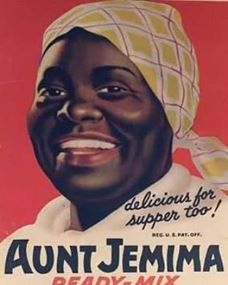
Nancy Green (Aunt Jemima)
|
|
September 3, 1923 – The Deputy Coroner holds an inquest into the
death of Mrs. Nancy Green, an 83-year-old woman who died when an
automobile collided with a laundry truck, overturning on the sidewalk,
where Green was standing under the elevated structure at 3100 South
State Street. Green was born on March 4, 1834, as a slave in
Montgomery County, Kentucky. She came to Chicago to serve as a nurse
and household servant for the wealthy Walker family, and Charles M.
Walker, the chief justice of the Municipal Court and his brother, Dr.
Samuel Walker, raved to their friends about the pancakes that she made.
[Chicago Daily Tribune, September 4, 1923]. At the age of 56 she was
selected by the R. T. Davis Milling Company to serve as the living symbol
for its pancake mix. Nancy Green became Aunt Jemima, and in 1893 the
company made the decision to begin a huge promotion of its product at
the 1893 World’s Columbian Exposition. According to the African
American Registry, “Green was a hit, friendly, a good storyteller … Her
exhibition booth drew so many people that special policemen were
assigned to keep the crowds moving.” [aaregistry.org] The Davis Milling
Company received more than 50,000 orders at the fair. Green signed a
lifetime contract and traveled all over the country, promoting the
pancake mix. By 1910 more than 120 million Aunt Jemima pancake
meals were being served annually, roughly equivalent to the population
of the United States. [medium.com]. Green was more than a
spokesperson for a flour company, though. She was also an organizer of
the Olivet Baptist Church, one of the largest African-American churches
in Chicago. She raised her voice consistently in her late years to
advocate for anti-poverty programs and equal rights. She is buried in
Chicago’s Oak Woods Cemetery.
|
|
| |
|
|
|
| |
Blatengeta Herui Wolde Sellassie
|
|
From His Imperial Majesty Emperor Haile Selassie I during the Italian occupation of Ethiopia documented in his book, My Life and
Ethiopia's Progress - Volume Two Addis Abeba 1966 E.C. published by: Research Associates School Times Publications.
"While We were still at our residence in Bath, Our most trusted minister Blatengeta Herui Wolde Sellassie died. This brought
sadness after sadness upon Us. The brilliant and iron-willed Herui was Our confidant and helper. Deeply touched by his death, We
said the following at his funeral:
"This person, Blatengeta Herui Wolde Sellassie, whom you see taking part in the tradition bequeathed to him by Adam,
was educated according to our country's tradition and was one of the high ranking intellectuals of Ethiopia. Because he
effectively utilized his shrewdness and farsightedness for good purposes, he was selected to work in Our government
and succeeded in becoming the Minister of Foreign Affairs. The books he published... will remain testimonies of his
noble behavior His knowledge of church affairs and history has made him famous and honored among world
intellectuals. It is needless to recount the achievements of a person whom you know well. But if I reminisce about the
excellence of his career. I would like [also] to mention the time he devoted to doing honorable deeds, his desire to help
the needy before himself, his high regard for justice and truth, and his burning love for his country.
My colleague and friend Herui, as you depart after successful completion of your service to your country, if I fail to say
'you are great', your works would give the lie to my words. Although the storm generated by wicked people destabilized
the world and buffeted you, it did not defeat you. Yet you had to obey the rule of the Great and Kind Lord. We are all
subject to this eventuality. After struggling up to your last breath, today you become exhausted. You fell asleep.
Although you no longer will be among us in body, your name and work will remain with Us.
Herui! rest here in peace in a land where you came to be a guest until God in his mercy turns his face to us and until your
remains and your spirit unites with the remains of your forefathers."
|
| |
|
Emperor Zera Yacob, who ruled from 1434-68 under the regnal name
Kwestantinos I or Constantine I, was the greatest of the emperors in
medieval Ethiopian history. Born at Telq in the province of Fatajar (now
part of the Oromia Region, near the Awash River), Zara Yaqob was the
youngest son of Dawit I and his youngest wife, Igzi Kebra.He’s noted for
his reorganization of the government, literary achievements, piety, and
social reform.
Zera Yacob also occupies a major place in the Ethiopian Orthodox
Tewahedo Church for his expansion and strengthening of the Christian
Faith in Ethiopia. His period was also noted for the beginning of the first
contacts with Christian Europe. He associated himself very closely to the
Church which he reformed, laying down saint’s days and days of feast
and fasting, and decreeing that Christians should tattoo themselves with
a cross.
During the time of Emperor Zera Yacob literature flourished. He was a
patron of literature and he himself wrote a number of books on religion,
such as Metsehaf Berhan (Book of Light), the Metsehaf Milad ("The Book
of Nativity") Metsehaf Selassie ("The Book of the Trinity") and compiled
the Fetha Nagast (Law of the Kings) the Law code used in the courts
until 1930. Many books from foreign languages were also translated into
Ge’ez.
While on his throne, Emperor Zera Yacob had a spiritual life comparable
to that in a monastery. Zera Yacob himself as well established many
churches and monasteries, the most famous being that of Dabra
Metmaq, at Tagulat in Shawa, built in 1441 to commemorate the
Egyptian monastery of the same name which the Muslims had
destroyed. The church and palace at his last capital, Dabra Berehan,
were his most magnificent buildings. He’s remembered today spiritually
with the likes of Kaleb.
Source: Tsega Tekle Haimanot ~ FB post ~ 10 Oct 2019
|
|
| |
|
In the Name of the Father, and the Son, and the Holy Spirit. One God. Amen.
Saint Ema Wotete
Martyrdom and Covenant of Our righteous Mother Ema Wotete
In the history of Saints, there were and are many blessed women who dedicated their lives for the service of God. One of those is
Saint Ema Wotete. This righteous lady was persecuted from Yifag which was the 'awraja'(district) of Lebo under the province of
Gondar, due to the religous problem that appeared during the period of Susinios. She went together with female saints to Wofgie
Kidanmehiret around serdiet(this is found in the 'awraja' of Gaynt and the Wereda is called Simada). Staying there she decided that
a church under the name of Kidane Meheret(Covenant of Mercy) should be built there because when birds sing, the song (praising)
of the birds was revealed to her by the Holy Spirit. When Susinios had passed by the will of God, i.e. when a decree was made about
the coronation of Fassil, the return of the Tewahedo Religion (Faith) and the decline of Catholic Religion (Faith), she brought the
Ark of Kidane Meheret from Tana Kirkos by getting admission and constructed a church and named it Wofgie Kidane Meheret.
Wofgie means "lovely my Lord." Jesus Christ revealed His love and mercy by the mouth of birds through the Holy Spirit.
Our mother saint Ema Wotete through the guidance of God the Holy Spirit had many things in this monastery. For example she had
divided the monastery between the males(The upper part) and the females(The lower part). Until this day it is called the upper
monastery and the lower monastery. She had made rules and regulations for both monasteries. She gave also land for the cat
which protects the Holy articles and the wheat for the Eucharist from sats. During that time the place was densely forested and she
had made many spiritual warfare against the beasts and the demons. Our Lord Jesus Christ, seeing her good works gave her the
following Holy Covenant.
1. Healing power: At the place there is a hot spring (holy water) and every time people from near and far are getting healed by the
name of mercy prayer Kidane Meheret and our mother Saint Ema Wotete.
2. Sterile women when they go to the monastery and carry on their shoulder the books of martyrdom/& miracle of the righteous
Ema Wotete and make a vow to God, they give birth after a year.
3. Those who repent their sins and stay for two "subayie" i.e. by doing two weeks of praying, fasting and bowing, all their sins will
be cleaned by the Covenant given to her.
Monasteries by the name of our mother saint Ema Wotete include:
1. Wofgie Kidane Meheret Monastery of Ema Wotete Simada, South Gondar
2. Ema Wotete St.George Church Estie wereda, South Gondar.
May the Prayers and honour of Our Mother Ema Wotete be on us.
Source: Tsega Tekle Haimanot ~ FB post ~ 14 Oct 2019
|
|
| |
|
መልከ ጸደቅ/Melchizedek
+ + + Genesis 14:18-19 + + +
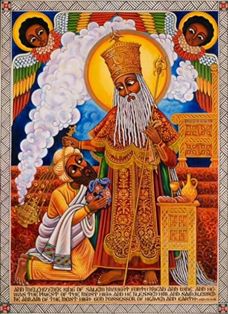
And Melchizedek king of Salem brought out bread and wine; now he was
a priest of God Most High. He blessed him and said, "Blessed be Abram
of God Most High, Possessor of heaven and earth;
+ + + Hebrews 7:1-3 + + +
For this Melchizedek, king of Salem, priest of the Most High God, who
met Abraham as he was returning from the slaughter of the kings and
blessed him, to whom also Abraham apportioned a tenth part of all the
spoils, was first of all, by the translation of his name, king of
righteousness, and then also king of Salem, which is king of peace.
Without father, without mother, without genealogy, having neither
beginning of days nor end of life, but made like the Son of God, he
remains a priest perpetually.
+ + + Acts 2:34 + + +
"For it was not David who ascended into heaven, but he himself says:
'THE LORD SAID TO MY LORD, "SIT AT MY RIGHT HAND,
+ + + Hebrews 5:8-10 + + +
Although He was a Son, He learned obedience from the things which He
suffered. And having been made perfect, He became to all those who
obey Him the source of eternal salvation,
+ + + Hebrews 5:10 + + +
being designated by God as a high priest according to the order of
Melchizedek.
+ + + Hebrews 6:19-20 + + +
This hope we have as an anchor of the soul, a hope both sure and
steadfast and one which enters within the veil, where Iyesus aka Jesus
has entered as a forerunner for us, having become a high priest forever
according to the order of Melchizedek.
+ + + Psalm 110 + + +
The LORD has sworn and will not change His mind, "You are a priest
forever According to the order of Melchizedek."
+ + + Hebrews 7:9-10 + + +
And, so to speak, through Abraham even Levi, who received tithes, paid
tithes, for he was still in the loins of his father when Melchizedek met
him.
+ + + Hebrews 7:11 + + +
Now if perfection was through the Levitical priesthood (for on the basis
of it the people received the Law), what further need was there for
another priest to arise according to the order of Melchizedek, and not be
designated according to the order of Aaron?
+ + + Hebrews 7:14-17 + + +
For it is evident that our Lord was descended from Judah, a tribe with
reference to which Moses spoke nothing concerning priests. And this is
clearer still, if another priest arises according to the likeness of
Melchizedek, who has become such not on the basis of a law of physical
requirement, but according to the power of an indestructible life. read
more.
+ + + Hebrews 5:6 + + +
just as He says also in another passage, "YOU ARE A PRIEST FOREVER
ACCORDING TO THE ORDER OF MELCHIZEDEK."
+ + + Acts 1:9 + + +
And after He had said these things, He was lifted up while they were
looking on, and a cloud received Him out of their sight.
+ + + Acts 2:33 + + +
"Therefore having been exalted to the right hand of God, and having
received from the Father the promise of the Holy Spirit, He has poured
forth this which you both see and hear.
+ + + Hebrews 4:14. + + +
Therefore, since we have a great high priest who has passed through the
heavens, Iyesus the Son of God, let us hold fast our confession.
#Ameyn. * + *
Source: I-Ras Black E'Dd ~ FB post ~ 24 Oct 2019
|
|
|
| |
|
Cudjoe Kazoola Lewis, The last known survivor of the Atlantic slave
trade between Africa and North America, Early 1900’s
Cudjoe Kazoola Lewis (c. 1840 – July 17, 1935), or Cudjo Lewis (born
Oluale Kossola) was the last known survivor of the Atlantic slave trade
between Africa and the United States. Together with 115 other African
captives, he was brought illegally to the United States on board the ship
Clotilda in 1860.They were landed in the backwaters near Mobile,
Alabama, and hidden from authorities. The ship was scuttled to evade
discovery.
After the Civil War, Lewis and other members of the Clotilda group
became free and established a community at Magazine Point, north of
Mobile, Alabama. Now designated as the Africatown Historic District, it
was added to the National Register of Historic Places in 2012. In old age
Lewis preserved the experiences of the Clotilda captives by providing
accounts of the history of the group to visitors,
Cudjo died July 17, 1935, and was buried at the Plateau Cemetery in
Africatown. Since his death, his status as the last survivor of the Clotilda
and the written record created by his interviewers have made him a
public figure of the history of the community.
Findagrave
https://buff.ly/2GeAvrk…/27752396/cudjoe-kazoola-lewis
https://buff.ly/2FXEDNn
Source: Ebony Anita ~ FB post ~ 26 Oct 2019
|
|
| |
Enquan Le Kidane Meheret Beal Aderasachu!!!
Happy Monthly Feast of the Covenant of Mercy
|
|
|
|
27 Oct 2019, 11:39
"Enquan Le Kidane Meheret Beal Aderasachu!!!
Happy Monthly Feast of the Covenant of Mercy
Kidane Meheret (The Covenant of Mercy) which The Virgin Mary received from Her Son, Our Redeemer, Jesus Christ
Now when the Son of this holy woman, Mary, whose pure flesh He had taken upon Himself, went up to heaven, He sat down on the
right hand of His Father, having fulfilled all the Law, and taken upon Himself the human nature, with exception of sin, and gained
dominion over the pains of the Cross by His own free will which He exercised for our redemption. And He left His mother Mary in
the house of John His disciple, whom He loved, and whom He committed unto Her protection, saying, “Behold Thy son”, and also to
that disciple He said, “Behold thy mother.” And our Lady Mary dwelt there, and She was wont to go unto the grave of Her Son, that
is to say Golgotha, to pray there. And it came to pass that when the Jews saw Her they were filled with wrath and jealousy, and they
wished to stone Her, but God made Her to disappear from their sight. Then they took counsel together and appointed guards over
His grave, so that She might not be able to come and pray there again; but She ceased not to go there each day. Now the guards
never saw Her, for the mantle of the glory of Her Son made Her to be invisible, and angels came unto Her at all times to minister
unto Her, and Her Son, our Lord Jesus Christ, watched over Her continually, and fulfilled for Her all Her desires.
And after this He made Her to ascend into heaven, and He showed Her the place where the righteous rest, and where dwell
Abraham, Isaac, and Jacob; and the spirits of all the fathers who had died from Adam unto Christ received Her. And they bowed
down before Her and said, “Glory be unto God who hath created Thee for us, flesh of our flesh and bone of our bones; in Thee we
have found redemption. And Thou hast become the gate of Life leading away from destruction, through the incarnation of the Son
of God of Thee.” Then the angels lifted Her up and carried Her unto Her beloved Son, who was seated upon His throne, and flames
of fire covered Him round about on the right hand and the left. Then our Lord took Her hand, and He kissed Her mouth and said
unto Her, “Hast Thou come, O My Mother?” Then He made Her to ascend His throne of glory, and to sit by His side, and He
described unto Her the joy and gladness which eye had never seen, and ear had never heard, and the heart of man had never
imagined, that He had prepared for Her. And below the throne She saw David Her father, the king of Israel, together with all the
company of the prophets and the angels; and the souls of the righteous were standing round about them. And David was singing
Psalms to his harp, and saying, “Hearken, O my daughter, see and incline Thy ear, forget Thy people and Thy father’s house, for the
King hath desired Thy beauty, and He is Thy Lord. (Psalm 45:10-11)
And again the angels set Her so that She might see the place of judgment, and they brought Her unto the place which was the
boundary of darkness that had been prepared for Satan and his angels, and for all those who walked in his ways. Then our Lady
Mary said, “Woe is Me! Who will announce to the children of Men that they shall come here?” And an angel said unto Her, “Fear
Thou not O Mary, God is with Thee. He is with Thee, and He will be with those who shall come after Thee” Then the angels carried
Her along and brought Her back to Her former place. And straightway our Lady Mary sat down, being exceedingly sorrowful for all
the sinners. Now that day was sixteenth day of the month of Yekatit (February 23), and She stood up on the “place of the skull”
(Golgotha), and She made supplication unto Her Son, saying “I adjure Thee, O My Son, by God Almighty thy Father, and by Thy
Name Christ, and by the Paraclete Thy Spirit, and by My womb which bore Thee, whom earth is not able to bear, and whom even
the angels are not able to approach, for nine months, and five days; I adjure Thee, O My Son, by Thy going forth from Me without
pain, and by Thy birth; I adjure Thee by My breasts which gave Thee suck, and by My lips which kissed Thee, and by My arms
which embraced Thee, and by My feet which walked about with Thee; I adjure Thee by the cradle wherein Thou didst lie, and by
Thy swaddling bands wherewith Thou wast swathed; O My Son, My beloved one, I entreat and make supplication unto Thee that
Thou may hearken unto the voice of My petition, and may come unto Me, and may fulfill everything which is in my heart.”
And it came to pass that when our Lady, the Holy Virgin Mary, the Mother of the Light, has thus spoken, our Lord and redeemer
Jesus Christ came down, and with Him and round about Him were thousands of thousands and tens of thousands of angels. And He
said unto Her, “What shall I do for Thee, O Mary My Mother? And what wish is it that Thou wishest Me to fulfill for thee?” Then our
Lady, the Holy Virgin Mary, made answer unto Her beloved Son, and said unto Him, “O My Son, my beloved Son, and said unto Him,
“O My Son, my beloved One, My Lord and My Redeemer, my Hope, and My Refuge, in whom is My trust, in Thee have I My strength
and in Thy asylum do Thou protect Me; Thou art He whom I remember always. And now, hearken Thou unto My prayer and unto
My entreaty, and incline Thy ear unto the words of My mouth. I who speak unto Thee am Thy Mother Mary, and I am Thy
handmaiden. Whosoever shall celebrate the festival of My Commemoration, or shall build a church in My name, or shall clothe the
naked, or shall visit the sick, or shall feed the hungry, or shall give drink to him that is athirst, or shall comfort him that is
sorrowful, or shall make to rejoice him that is broken in spirit, or shall write a book of My praises, or shall meditate upon the
hymns sung to Me on the day of My festival, reward Thou him, O Lord, with a good reward from Thyself, the which eye had not
seen, nor ear had heard, nor mind of man had conceived. I beseech Thee and I make supplication unto Thee, O Lord, on behalf of all
those who shall believe on Me, that Thou wilt make them to be free from Sheol; and that Thou wilt remember him that is hungered
and him that is athirst, and all the trials which came upon Me with Thee.”
And our Lord Jesus Christ answered and said unto Her, “It shall be even as Thou sayest, and I will fulfill for Thee all Thy petition.
Did I not become man through Thee? I swear by Myself that I will not break My Covenant with Thee.”
Salutation unto Thee, O Book of the Law and the covenant like unto the Tables of stone,
For each and every one who shall call upon Thy name!
Let the hearts of sinners be softened, let the hearts of the oppressors be softened.
Let the hearts of those who are afflicted with sorrow be softened, O Mary. Amen.
Blessed art thou among women and Blessed is the fruit of your womb forever and ever."
Enquan Le Kidane Meheret Beal Aderasachu!!!
Happy Monthly Feast of the Covenant of Mercy
Kidane Meheret (The Covenant of Mercy) which The Virgin Mary received from Her Son, Our Redeemer, Jesus Christ
Now when the Son of this holy woman, Mary, whose pure flesh He had taken upon Himself, went up to heaven, He sat down on the
right hand of His Father, having fulfilled all the Law, and taken upon Himself the human nature, with exception of sin, and gained
dominion over the pains of the Cross by His own free will which He exercised for our redemption. And He left His mother Mary in
the house of John His disciple, whom He loved, and whom He committed unto Her protection, saying, “Behold Thy son”, and also to
that disciple He said, “Behold thy mother.” And our Lady Mary dwelt there, and She was wont to go unto the grave of Her Son, that
is to say Golgotha, to pray there. And it came to pass that when the Jews saw Her they were filled with wrath and jealousy, and they
wished to stone Her, but God made Her to disappear from their sight. Then they took counsel together and appointed guards over
His grave, so that She might not be able to come and pray there again; but She ceased not to go there each day. Now the guards
never saw Her, for the mantle of the glory of Her Son made Her to be invisible, and angels came unto Her at all times to minister
unto Her, and Her Son, our Lord Jesus Christ, watched over Her continually, and fulfilled for Her all Her desires.
And after this He made Her to ascend into heaven, and He showed Her the place where the righteous rest, and where dwell
Abraham, Isaac, and Jacob; and the spirits of all the fathers who had died from Adam unto Christ received Her. And they bowed
down before Her and said, “Glory be unto God who hath created Thee for us, flesh of our flesh and bone of our bones; in Thee we
have found redemption. And Thou hast become the gate of Life leading away from destruction, through the incarnation of the Son
of God of Thee.” Then the angels lifted Her up and carried Her unto Her beloved Son, who was seated upon His throne, and flames
of fire covered Him round about on the right hand and the left. Then our Lord took Her hand, and He kissed Her mouth and said
unto Her, “Hast Thou come, O My Mother?” Then He made Her to ascend His throne of glory, and to sit by His side, and He
described unto Her the joy and gladness which eye had never seen, and ear had never heard, and the heart of man had never
imagined, that He had prepared for Her. And below the throne She saw David Her father, the king of Israel, together with all the
company of the prophets and the angels; and the souls of the righteous were standing round about them. And David was singing
Psalms to his harp, and saying, “Hearken, O my daughter, see and incline Thy ear, forget Thy people and Thy father’s house, for the
King hath desired Thy beauty, and He is Thy Lord. (Psalm 45:10-11)
And again the angels set Her so that She might see the place of judgment, and they brought Her unto the place which was the
boundary of darkness that had been prepared for Satan and his angels, and for all those who walked in his ways. Then our Lady
Mary said, “Woe is Me! Who will announce to the children of Men that they shall come here?” And an angel said unto Her, “Fear
Thou not O Mary, God is with Thee. He is with Thee, and He will be with those who shall come after Thee” Then the angels carried
Her along and brought Her back to Her former place. And straightway our Lady Mary sat down, being exceedingly sorrowful for all
the sinners. Now that day was sixteenth day of the month of Yekatit (February 23), and She stood up on the “place of the skull”
(Golgotha), and She made supplication unto Her Son, saying “I adjure Thee, O My Son, by God Almighty thy Father, and by Thy
Name Christ, and by the Paraclete Thy Spirit, and by My womb which bore Thee, whom earth is not able to bear, and whom even
the angels are not able to approach, for nine months, and five days; I adjure Thee, O My Son, by Thy going forth from Me without
pain, and by Thy birth; I adjure Thee by My breasts which gave Thee suck, and by My lips which kissed Thee, and by My arms
which embraced Thee, and by My feet which walked about with Thee; I adjure Thee by the cradle wherein Thou didst lie, and by
Thy swaddling bands wherewith Thou wast swathed; O My Son, My beloved one, I entreat and make supplication unto Thee that
Thou may hearken unto the voice of My petition, and may come unto Me, and may fulfill everything which is in my heart.”
And it came to pass that when our Lady, the Holy Virgin Mary, the Mother of the Light, has thus spoken, our Lord and redeemer
Jesus Christ came down, and with Him and round about Him were thousands of thousands and tens of thousands of angels. And He
said unto Her, “What shall I do for Thee, O Mary My Mother? And what wish is it that Thou wishest Me to fulfill for thee?” Then our
Lady, the Holy Virgin Mary, made answer unto Her beloved Son, and said unto Him, “O My Son, my beloved Son, and said unto Him,
“O My Son, my beloved One, My Lord and My Redeemer, my Hope, and My Refuge, in whom is My trust, in Thee have I My strength
and in Thy asylum do Thou protect Me; Thou art He whom I remember always. And now, hearken Thou unto My prayer and unto
My entreaty, and incline Thy ear unto the words of My mouth. I who speak unto Thee am Thy Mother Mary, and I am Thy
handmaiden. Whosoever shall celebrate the festival of My Commemoration, or shall build a church in My name, or shall clothe the
naked, or shall visit the sick, or shall feed the hungry, or shall give drink to him that is athirst, or shall comfort him that is
sorrowful, or shall make to rejoice him that is broken in spirit, or shall write a book of My praises, or shall meditate upon the
hymns sung to Me on the day of My festival, reward Thou him, O Lord, with a good reward from Thyself, the which eye had not
seen, nor ear had heard, nor mind of man had conceived. I beseech Thee and I make supplication unto Thee, O Lord, on behalf of all
those who shall believe on Me, that Thou wilt make them to be free from Sheol; and that Thou wilt remember him that is hungered
and him that is athirst, and all the trials which came upon Me with Thee.”
And our Lord Jesus Christ answered and said unto Her, “It shall be even as Thou sayest, and I will fulfill for Thee all Thy petition.
Did I not become man through Thee? I swear by Myself that I will not break My Covenant with Thee.”
Salutation unto Thee, O Book of the Law and the covenant like unto the Tables of stone,
For each and every one who shall call upon Thy name!
Let the hearts of sinners be softened, let the hearts of the oppressors be softened.
Let the hearts of those who are afflicted with sorrow be softened, O Mary. Amen.
Blessed art thou among women and Blessed is the fruit of your womb forever and ever.
Source: Tsega Tekle Haimanot ~ FB post ~ 27 Oct 2019
|
| |
Queen Makeda
(Queen of Saba / Queen of Sheba)
|
|
|
|
Queen Makeda, (Queen of Saba)
*The name Sheba is Saba in the Ethiopian Language and the two names can be used interchangeably: However We will keep to the
Ethiopian usage of Saba
About a thousand years before the birth of Christ, the Queen of Saba, (Sheba), a descendant of a powerful line of kings, took the
sovereign authority of her forebears with the throne name of Queen of Saba, and began ruling over ancient Ethiopia and Yemen
from her capital at Saba near Aksum. She inherited the throne from her father Tewasia as the fifty-second sovereign of Ethiopia and
reigned over her joint kingdoms for thirty-one years. The Queen of Saba was known by various names, including that of the “Queen
of Saba”, her throne name mentioned in the Old Testament. In the New Testament she is known as the Queen of the South which
literally means in Ge’ez “Negesta Azeb.” She is known as Queen of the south because of the fact that she ruled over Ethiopia and
Yemen, both located to the South of Jerusalem. In the Kebre Nagast (Glory of Kings) she is mentioned as Makeda, her first name
which was given to her by her parents, meaning the king’s cushion which means support. Arab historians refer to her as Queen
Belqis.
The Queen of Saba, considered as the greatest ruler of Aksum, ruled over both Ethiopia and Yemen. The history of the Queen
occupies a very important chapter in the history of Ethiopia, owing to the continuity in government and traditions and
administration and the memory of the greatness that has been passed from generation to generation through oral history as well
as books like the Kebre Nagast (The Kebre Nagast was written in Ge’ez by Nebure Id Yishaq, the administrator of Aksum, in the 4th
century A.D. It tells the story of Solomon and Saba, and describes how Ethiopia came to possess the Ark of the Covenant containing
the two Tablets of the Law written by the Hand of God. It is the royal chronicle which records the glory of the sovereigns of
Ethiopia.) The Ethiopia Emperors also traced their lineage to Menelik, son of Queen of Saba, from the very beginning of the
establishment of the Solomonic line until the Ethiopian people’s revolution in 1974.
The Queen of Saba was an energetic ruler who maintained and expanded existing commercial activity, the trade route of which
extended as far as Palestine and India. To facilitate commerce, she had a fleet of seventy-three seaworthy ships and a caravan of
five hundred and twenty camels. These means of transport and the conduct of trade were the responsibility of Tamrin, reputed to
have been her trusted “Minister of Trade”. Ethiopian traders took with them civet, incense, gold, ivory precious stones and ebony
to foreign countries for trading purposes. Traders from other countries also plied to and from Ethiopia carrying precious stones,
gold, and civet and spread the fame of Ethiopia and Queen of Saba far and wide.
#Ameyn. +++
Source: I-Ras Black E'Dd ~ FB post ~ 9 Nov 2019
|
| |
| |
|
|
|
|
|
|
|
|
|
|
| |
|
|
Nothing is hidden from God's view!...
|
|
|
Copyright © 2011-2020 UMOJA Connection, Inc.
All rights reserved.
|
|
|